
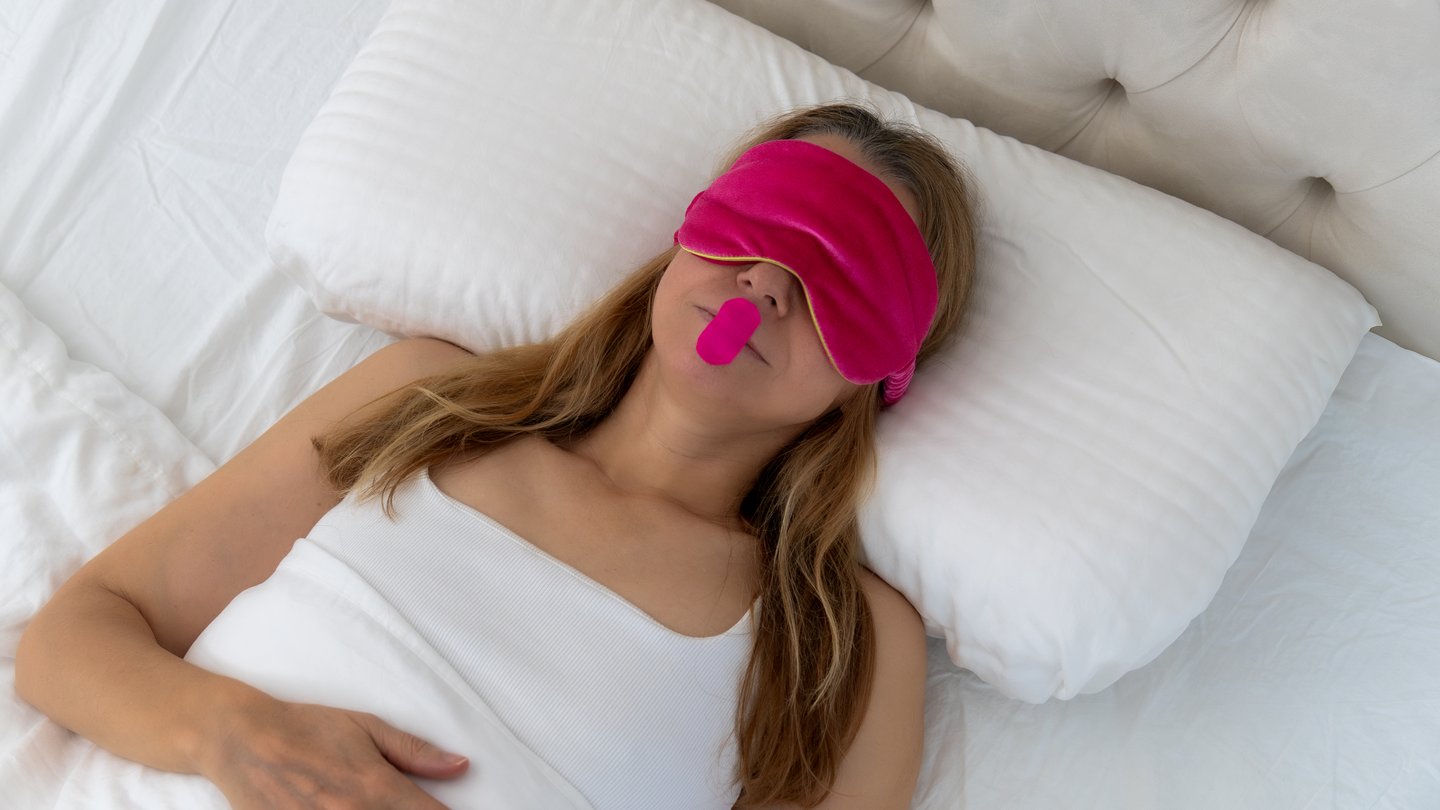
Mouth taping has become one of the most talked-about sleep trends online, with influencers claiming it can stop snoring, improve breathing, reduce dry mouth, and help people wake up feeling refreshed. But sleep experts are warning that taping the mouth shut at night can be risky, especially for people with blocked noses, snoring, asthma, anxiety, or undiagnosed sleep apnea. While nasal breathing can be healthy, forcing the mouth closed during sleep is not a safe solution for everyone.
What Is Mouth Taping?
Mouth taping is the practice of placing tape over the lips before going to sleep. The idea is to encourage breathing through the nose instead of the mouth.
Supporters claim it can reduce snoring, improve sleep quality, prevent dry mouth, and support better oxygen flow. Some also say it helps with morning breath, jawline appearance, and deeper rest.
The trend has spread widely on TikTok, Instagram, and wellness pages, where people often present it as a simple overnight hack.
But doctors say the reality is more complicated. Breathing through the nose is generally beneficial, but physically sealing the mouth can become dangerous if someone cannot breathe properly through their nose.
That is why experts say people should not copy the trend blindly just because it looks simple online.
Why Experts Are Warning Against It
Experts are warning against mouth taping because it can block a person’s backup breathing route during sleep. If the nose becomes blocked during the night, the mouth normally helps the body keep breathing.
When the mouth is taped shut, that backup route becomes harder to use. This can create panic, poor sleep, or breathing difficulty.
The concern is even greater for people with sleep apnea, a condition where breathing repeatedly stops or becomes shallow during sleep. Many people with sleep apnea do not know they have it.
Snoring can sometimes be a warning sign of sleep apnea. If someone tapes their mouth to stop snoring without checking the cause, they may hide a symptom instead of treating the real problem.
Doctors also warn that mouth taping can cause skin irritation, anxiety, allergic reactions to adhesive, and disrupted sleep.
For some people, the trend may create more problems than it solves.
Why Nasal Breathing Matters
Nasal breathing is important because the nose filters, warms, and humidifies air before it reaches the lungs. Breathing through the nose can also help reduce dry mouth and support better airflow during sleep.
This is why many people are interested in training themselves to breathe through the nose at night.
However, nasal breathing should happen naturally and comfortably. It should not be forced in a way that creates risk.
If someone regularly breathes through their mouth while sleeping, there may be an underlying reason. Common causes include allergies, sinus problems, nasal congestion, a deviated septum, enlarged tonsils, or sleep apnea.
Taping the mouth does not fix those issues. It only covers the symptom.
A safer approach is to find out why mouth breathing is happening in the first place.
Who Should Avoid Mouth Taping?
People should avoid mouth taping if they snore heavily, wake up gasping, have sleep apnea, or suspect they may have breathing problems during sleep.
It should also be avoided by people with chronic nasal congestion, asthma, respiratory illness, anxiety around restricted breathing, or trouble breathing through the nose.
People who are sick, congested, or dealing with allergies should also avoid it because the nose may become blocked during the night.
Mouth taping is especially risky if someone lives alone and has not been medically checked for sleep-related breathing issues.
Children should not use mouth tape unless a qualified healthcare professional specifically advises it. Sleep and breathing issues in children should always be properly evaluated.
The safest rule is simple: if breathing through the nose is not easy while awake, taping the mouth during sleep is not a good idea.
Does Mouth Taping Actually Stop Snoring?
Mouth taping may reduce snoring for some people, but it is not a reliable treatment. Snoring can happen for many reasons, and mouth breathing is only one possible factor.
Some small studies suggest certain people may snore less when their mouth stays closed. But the research is limited, and experts say there is not enough strong evidence to recommend the trend widely.
The bigger concern is that snoring can signal a deeper airway problem. If snoring is loud, frequent, or paired with daytime tiredness, morning headaches, gasping, or poor concentration, a sleep study may be needed.
Stopping the sound of snoring is not the same as treating the cause.
If someone has sleep apnea, mouth taping could make the situation more dangerous by restricting airflow instead of improving it.
That is why doctors recommend proper evaluation before trying viral sleep hacks.
Safer Ways to Improve Night Breathing
There are safer ways to improve nighttime breathing without taping the mouth shut. One option is sleeping on the side instead of the back, because back sleeping can worsen snoring for some people.
Nasal strips may help open the nose slightly and improve airflow. Saline sprays or rinses can also help if congestion is mild.
Managing allergies can make a big difference. Dust, pet dander, mold, or seasonal allergies can block the nose and lead to mouth breathing.
Keeping the bedroom air comfortable may also help. Dry air can irritate the nose and throat, while a humidifier may help some people.
For people with frequent snoring or suspected sleep apnea, medical treatment may be needed. This could include a sleep study, CPAP machine, oral appliance, or treatment for nasal blockage.
The right solution depends on the cause.
Why Viral Sleep Hacks Can Be Misleading
Viral sleep hacks can be misleading because they often show only the positive side. A creator may say mouth taping changed their life, but that does not mean it is safe for everyone.
Social media also makes simple solutions look more powerful than they are. Sleep problems are often complex and can involve stress, breathing, hormones, medication, lifestyle, pain, or medical conditions.
A single piece of tape cannot solve every sleep issue.
Some wellness trends become popular because they feel easy, cheap, and natural. But “natural” does not always mean safe.
Mouth taping is a good example. It may look harmless, but it can affect breathing during the most vulnerable time of the day: while asleep.
That is why expert advice matters more than viral popularity.
When to Speak to a Doctor
You should speak to a doctor if you snore loudly, wake up choking or gasping, feel tired despite sleeping, wake with headaches, or have trouble breathing through your nose.
You should also seek advice if a partner notices pauses in your breathing during sleep.
These signs may point to sleep apnea or another airway issue that needs proper care.
A doctor may recommend a sleep study or refer you to a sleep specialist, dentist, or ear, nose, and throat specialist depending on the symptoms.
Getting checked does not mean something is seriously wrong. It simply helps identify the safest way to improve sleep.
If mouth breathing is frequent, the better question is not “How do I tape my mouth shut?” but “Why am I mouth breathing in the first place?”
Key Takeaways
- Mouth taping is a viral trend where people tape their lips closed during sleep to encourage nasal breathing.
- Experts warn it can be risky for people with snoring, sleep apnea, blocked noses, asthma, or breathing difficulties.
- Nasal breathing is healthy, but forcing the mouth closed does not solve the cause of mouth breathing.
- Mouth taping may cause breathing trouble, anxiety, skin irritation, allergic reactions, or poor sleep.
- Safer options include treating congestion, using nasal strips, side sleeping, and getting checked for sleep apnea if symptoms continue.
Mouth taping may look like a simple sleep hack, but experts say breathing problems should be understood and treated properly rather than covered with tape.