
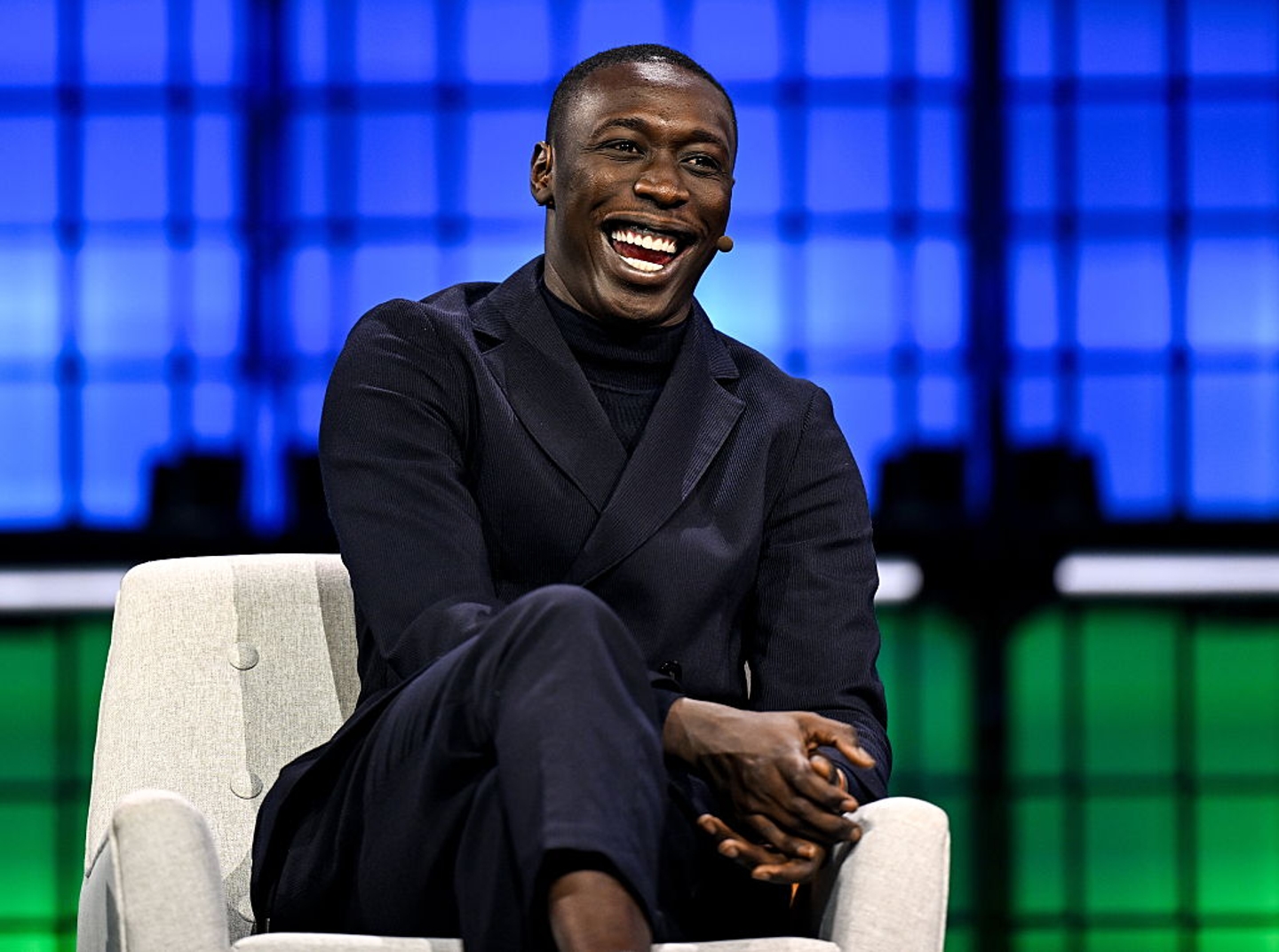
Khaby Lame, the most-followed creator on TikTok, shocked the creator economy after announcing a business deal valued at $975 million. The agreement involved selling his operating company, Step Distinctive Limited, to Rich Sparkle Holdings, a publicly traded company connected to Web3, e-commerce, and AI-driven creator technology. The deal sounded like a landmark moment for influencers, but recent reports suggest the situation has become far more complicated than the headline number first made it appear.
Khaby Lame’s Huge Business Deal Stunned Fans
Khaby Lame became famous for silent reaction videos where he mocked overly complicated life hacks with simple gestures and facial expressions. His content worked across languages because he rarely needed to speak.
That simple formula helped him become the biggest creator on TikTok, with more than 160 million followers on the platform and hundreds of millions more across social media.
Because of that massive audience, brands and investors have viewed Lame as more than just a comedian. He is now seen as a global media asset with commercial power.
The $975 million deal was announced as a major creator-economy moment. It suggested that an internet personality could turn short-form video fame into a public-market business opportunity.
For fans, it looked like proof that a creator who started with phone videos could build a near-billion-dollar empire.
But the details behind the deal made the story more complex.
What Was Included in the $975 Million Agreement?
The deal involved Rich Sparkle Holdings acquiring Khaby Lame’s operating company, Step Distinctive Limited. The company manages parts of his brand, commercial activity, endorsements, and creator business.
The agreement was not described as a simple cash payout. Reports said the deal involved the issuance of shares, meaning Lame’s payday was tied heavily to stock value rather than money landing directly in his bank account.
That difference matters. A deal can be valued at $975 million on paper, but the real value depends on whether the shares hold their price and whether the transaction fully completes as expected.
The agreement also included plans to create an AI digital twin of Lame. This would allow his image, voice, expressions, and gestures to be used in multilingual content and e-commerce campaigns.
In simple words, the company wanted to turn Khaby Lame into a scalable digital brand that could sell products and appear in content across markets without him physically filming every post.
That idea sounded futuristic, but it also raised questions about AI, identity, and whether followers would respond to a digital version of a real creator.
Why the AI Digital Twin Became a Big Talking Point
The AI digital twin became one of the most discussed parts of the deal because it could change how influencer businesses work. Instead of relying only on the creator’s time, energy, and schedule, a company could create content using an AI version of the person.
For Lame, this makes business sense on paper. His humor depends heavily on gestures, facial expressions, and simple visual reactions, which may be easier to translate into AI-generated content than long scripted performances.
The company reportedly wanted to use his digital twin for e-commerce, livestreaming, brand campaigns, and multilingual social media content.
That could allow Lame’s brand to appear in many countries at once, speaking different languages and selling products to different audiences.
However, this also raises major concerns. Fans may not feel the same connection to an AI version. There are also questions about control, consent, authenticity, and how far a company should be allowed to replicate a person’s behavior.
The deal shows where the creator economy may be heading: influencers are no longer just people posting content. Their image and personality can become technology assets.
Why the Deal Is Now Facing Doubts
The deal is now facing doubts because the stock connected to Rich Sparkle Holdings reportedly surged after the announcement and then fell sharply. Some reports said the stock dropped more than 90% from its peak, raising questions about whether the headline valuation still means what people first thought.
Several brokerage platforms reportedly restricted or blocked trading in the stock, citing concerns around viability and low market value.
There were also questions about missing or unclear filings, whether the merger had fully closed, and why Lame appeared to go quiet about the deal after initially promoting it.
This is why some analysts became skeptical. A creator deal can sound huge in a press release, but public-market details, filings, shareholder structure, and stock performance determine how solid it really is.
The situation does not mean Lame did anything wrong. It means the business around the deal appears complicated and may not match the simple “creator becomes billionaire” narrative that spread online.
The story has become a reminder that headline valuations can be very different from actual money.
Did Khaby Lame Become a Billionaire?
Khaby Lame did not necessarily become a billionaire overnight. That was one of the biggest misunderstandings after the deal was announced.
The $975 million valuation was connected to the transaction structure, shares, brand rights, and company value. It was not the same as receiving nearly one billion dollars in cash.
If much of the deal was paid in shares, then the value depends on the stock price. If the stock drops, the value of the deal can fall dramatically.
This is common in large business transactions. A deal may be announced at a certain value, but that value can change depending on market conditions, investor confidence, and whether the agreement is completed.
That is why billionaire rumors around Lame should be treated carefully.
He is clearly one of the most successful creators in the world, and the deal may still be financially significant. But calling him a billionaire from this announcement alone would be misleading.
Why Investors Became Nervous
Investors became nervous because the deal involved a major creator brand, a public company, AI promises, and very large revenue projections. Reports said the company claimed the partnership could eventually generate billions in annual sales.
That kind of projection naturally attracts attention, but it also invites skepticism.
Turning followers into customers is not automatic. A creator may have millions of fans, but that does not mean those fans will buy products at the scale investors expect.
E-commerce, AI avatars, livestream shopping, and brand licensing can all make money, but they require strong execution.
Another concern was the company behind the deal. Rich Sparkle Holdings was not originally known as a major creator-economy giant. That made some analysts question how realistic the plan was.
When the stock began falling and brokerage firms restricted trading, doubts grew even more.
The deal became less of a simple success story and more of a case study in how risky creator-backed public-market deals can be.
Why This Matters for the Creator Economy
This story matters because it shows how far the creator economy has evolved. A TikTok star’s brand can now be packaged into a company, tied to public shares, connected to AI technology, and promoted as a global e-commerce machine.
That would have sounded impossible a decade ago.
Creators used to earn mainly through platform ads, sponsorships, merchandise, and appearances. Now, the biggest creators are being treated like media companies.
Khaby Lame’s deal could become a turning point if it works. It could show that creators can build public-market businesses based on audience, personality, and AI rights.
But if it struggles, it may become a warning about overvaluing internet fame.
Followers are powerful, but they are not the same as guaranteed revenue. A viral face is valuable, but turning attention into a stable business is much harder.
Why Khaby Lame Is Still a Major Digital Figure
Even with questions around the deal, Khaby Lame remains one of the most important figures in social media. His rise is extraordinary because he built a global audience with almost no spoken language barrier.
He started posting during the pandemic after losing factory work and quickly became known for his simple, expressive reactions.
His appeal was universal. Anyone could understand the joke, whether they spoke English, Italian, Arabic, French, Spanish, or any other language.
That made him uniquely valuable to brands. Unlike many creators who are tied to one country or language, Lame can reach audiences around the world.
This global simplicity is exactly why companies are interested in turning his image into an AI-powered commercial engine.
Whether the $975 million deal succeeds or not, Lame’s influence is not in doubt.
Key Takeaways
- Khaby Lame’s company, Step Distinctive Limited, was part of a deal valued at $975 million with Rich Sparkle Holdings.
- The agreement included plans to create an AI digital twin using his image, voice, gestures, and behavior.
- The deal was largely connected to shares, not a simple cash payout.
- Reports later raised concerns after the linked stock fell sharply and some brokerages restricted trading.
- Lame likely did not become a billionaire overnight, despite viral claims.
- The story shows both the massive potential and serious risks of turning creator fame into a public-market business.
Khaby Lame’s $975 million deal may still become a landmark moment for influencers, but it also proves one important thing: in the creator economy, viral fame can create huge value, yet turning that value into a stable business is far from simple.