
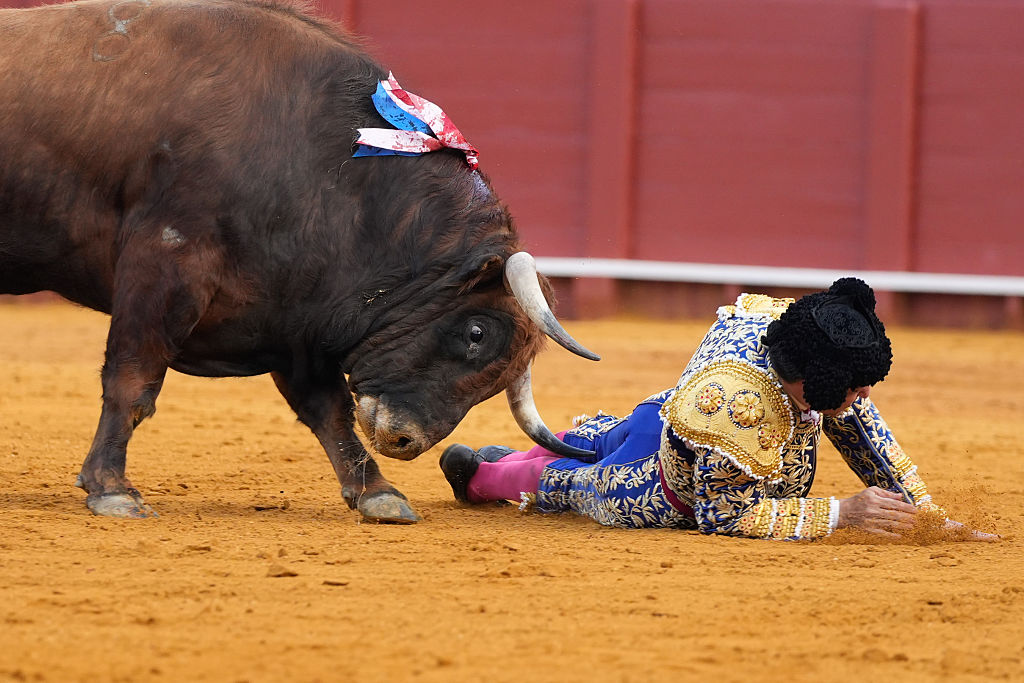
Morante de la Puebla is facing a difficult recovery after a terrifying bullfighting accident in Seville left the famous Spanish matador with a serious injury. The 46-year-old bullfighter, widely regarded as one of the biggest names in the sport, was rushed to hospital after being gored during a traditional event at the Maestranza arena on Monday, April 20.
Morante de la Puebla Injured During Seville Bullfight
Morante de la Puebla was injured when a bull charged at him during a fight in Seville and struck him from behind. The incident happened at the Maestranza arena, one of Spain’s most famous bullfighting venues, during a traditional event that quickly turned into a medical emergency.
According to reports, the Spanish matador had already faced three of the four bulls involved in the event when the final bull charged while his back was turned. He attempted to use the muleta, the traditional red cape used in bullfighting, to redirect the animal away from him.
The bull, however, continued toward him and made contact with frightening force. The injury was later described as a four-inch tear, requiring urgent medical attention and surgery.
Images from the scene showed Morante on the ground, visibly hurt, before other matadors helped carry him out of the ring. He was then taken for treatment as concerns grew over the seriousness of the injury and what it could mean for his recovery.
What Did Morante Say After the Goring?
Morante said the goring was the most painful of his life. Speaking from his hospital bed in a video shared on Instagram, he described feeling intense pain and fear after realizing the bull had caught him.
He explained that he initially feared he was bleeding heavily. Once he reached the infirmary and saw that the bleeding was limited, he said he felt calmer, although the pain remained severe.
The matador described the injury in emotional terms, saying there was “no doubt” it was the most painful goring he had ever experienced. His comments gave fans and critics a rare look at the human cost behind a spectacle that is often discussed in terms of tradition, performance, and controversy.
Morante also said he was struggling to eat and sleep following the surgery. Doctors reportedly inserted a catheter to support his nutrition while he recovered from surgery to repair damage to the rectal wall and sphincter.
He said he had gone through a difficult night with little rest and no appetite, adding that he hoped to get through the recovery with patience.
A Serious Injury With a Long Recovery Ahead
Morante’s injury is serious because of the location and the type of surgical repair involved. Injuries affecting the rectal wall and sphincter can require careful treatment, pain management, and time before a person can fully return to normal physical activity.
For a professional bullfighter, recovery is even more complicated. Bullfighting demands fast movement, balance, timing, and the ability to react instantly when a bull changes direction. Any lasting pain or weakness could affect whether Morante is able to return to the ring with the same confidence.
At this stage, his future in bullfighting remains uncertain. Reports suggest his main focus is currently on healing after surgery and managing the pain that followed the Seville incident.
The accident has also raised fresh questions about the risks faced by even the most experienced matadors. Morante is not a newcomer to the sport. He is considered one of Spain’s most respected bullfighters and has built a long career around precision, style, and control in the ring.
That experience did not prevent the attack. The moment showed how quickly a bullfight can shift from a controlled performance to a life-threatening situation.
Why Bullfighting Remains So Controversial
Bullfighting remains controversial because it combines cultural tradition with major concerns about danger and animal suffering. In Spain, bullfighting has existed for centuries and still has strong support among those who see it as part of national and regional identity.
Supporters often describe it as an art form built on discipline, courage, and tradition. They argue that famous matadors like Morante represent a historic practice that has shaped Spanish culture for generations.
Critics see it very differently. Animal welfare campaigners argue that bullfighting causes unnecessary suffering to bulls and should not continue as entertainment. The debate has grown stronger in recent years as public attitudes toward animal rights have shifted.
The risks are not limited to the animals. Bullfighters themselves face serious danger every time they enter the ring. A single mistake, a sudden movement, or a mistimed step can lead to severe injury or death.
The incident involving Morante has again placed that danger in the spotlight. It is a reminder that bullfighting’s dramatic image is built around real physical risk, not staged performance.
The Global Debate Around Bullfighting
The debate around bullfighting extends far beyond Spain. Similar events have taken place in Portugal, France, and parts of Latin America, though laws and public opinion vary widely from country to country.
Some countries have banned bullfighting entirely. Reports note that bans exist in places including Argentina, Canada, Colombia, Cuba, Denmark, Italy, and the United Kingdom.
Animal welfare groups have also drawn attention to the number of bulls killed in these events worldwide. Humane World for Animals estimates that around 180,000 bulls are killed globally in bullfights each year.
Supporters of bullfighting often argue that a skilled matador can end the fight quickly. Critics respond that the process is not always clean or fast, and that many animals suffer prolonged injuries during the event.
For many people, Morante’s injury will be seen as evidence that bullfighting is dangerous for everyone involved. For others, it may be viewed as part of the risk accepted by professionals who dedicate their lives to the tradition.
Could Morante Return to the Ring?
Morante could return to the ring, but his recovery and medical advice will likely determine what happens next. The severity of the injury, the pain he has described, and the surgery required all make his return uncertain.
At 46, Morante has already spent years at the highest level of the sport. He has earned a reputation as one of the most skilled and recognizable matadors of his generation, sometimes referred to as the “King of Bullfighters.”
That reputation means any decision about his future will draw major attention in Spain and among bullfighting followers worldwide. A comeback would be seen as a major moment, while retirement or a long absence would also carry symbolic weight.
For now, the most important issue is his health. Pain, lack of sleep, and loss of appetite show that the early stage of recovery has been difficult. Even after surgery, injuries of this nature can take time to heal and may require careful follow-up.
The Seville goring may become one of the defining moments of Morante’s career. Whether it ends his time in the ring or becomes part of a larger comeback story remains to be seen.
Key Takeaways
- Morante de la Puebla was seriously injured during a bullfight in Seville on April 20.
- The Spanish matador suffered a four-inch tear after a bull charged and gored him from behind.
- He described the incident as the most painful goring of his life.
- Doctors performed surgery to repair damage, and he has struggled with pain, sleep, and appetite during recovery.
- The incident has renewed debate around bullfighting, animal welfare, and the risks faced by matadors.
Morante de la Puebla’s injury has turned one dramatic moment in the ring into a wider conversation about tradition, danger, and the future of bullfighting.