
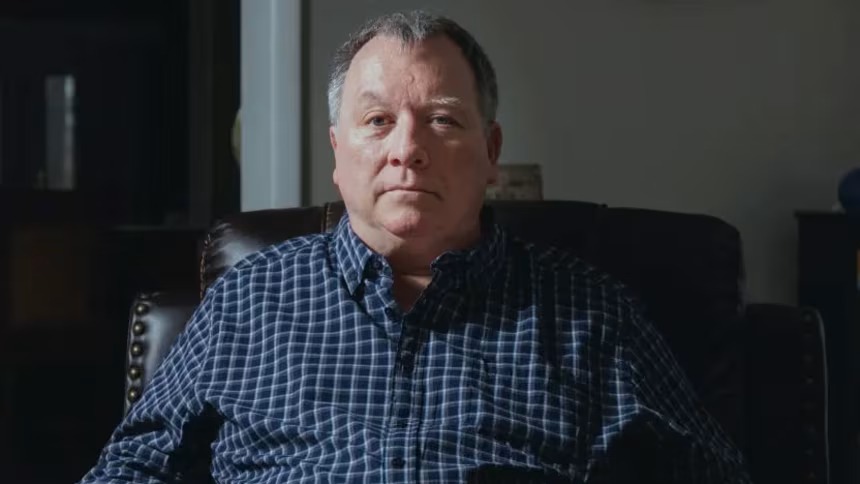
A retired Tennessee law enforcement officer, Larry Bushart, has reached an $835,000 settlement with local officials after being held in custody for more than a month over a social media post he shared following the assassination of conservative activist Charlie Kirk.
Bushart, 61, was arrested in September 2025 by the Perry County Sheriff’s Office after posting a widely shared meme on Facebook related to a community vigil honoring Kirk. Authorities interpreted the post in a way that they said could be seen as a potential threat to a local school, even though the meme actually referenced a different school incident in Iowa.
Under a deal announced in May 2026, Bushart agreed to drop his federal lawsuit against Perry County, Sheriff Nick Weems, and county investigator Jason Morrow. The settlement resolves the civil rights case Bushart filed in December 2025, alleging his constitutional rights were violated, including his right to free expression.
Background: The Facebook Post That Sparked Controversy
The dispute began about ten days after Kirk was killed during an outdoor event at a university in Utah. Bushart shared a meme on a local Facebook discussion about a scheduled vigil. The image included a quote attributed to former President Donald Trump — “We have to get over it” — which was originally said in response to a 2024 school shooting in Perry, Iowa.
Sheriff Weems and the investigating officer used that shared post as grounds to seek a warrant for Bushart’s arrest on a felony charge related to alleged threats of violence at a nearby school with a similar name in Tennessee. Bushart was unable to post the $2 million bail set by a judge and remained in custody for 37 days before prosecutors dropped the charge in late October.
Lawsuit and Settlement
After his release, Bushart filed a federal civil rights lawsuit, arguing that his detention violated his rights under the U.S. Constitution, including his free expression protections. He claimed that the arrest and months in custody harmed him personally and professionally — including losing his post‑retirement job and missing family events such as his wedding anniversary and the birth of his grandchild.
The lawsuit alleged that the warrant used to arrest Bushart lacked proper justification and that authorities failed to distinguish between harmful threats and constitutionally protected speech. Representatives from the Foundation for Individual Rights and Expression (FIRE), which helped Bushart with his case, argued that the settlement underscores the importance of protecting lawful online commentary during high‑tension moments.
Under the terms of the settlement, the defendants — Perry County, Sheriff Weems, and Investigator Morrow — do not admit any wrongdoing, but the county’s insurance carrier will pay the agreed amount.
Broader Implications
The case attracted national interest because it involved the intersection of online speech, community safety concerns, and free expression rights during a period of heightened emotions after a prominent public figure’s death. Legal advocates say the settlement may serve as a reminder to law enforcement agencies about the need to distinguish constitutionally protected commentary from actual threats when responding to online posts.
Bushart has stated that his right to engage in public discourse has been affirmed through the settlement and that he looks forward to moving on and spending time with his family.
Key Takeaways
- Tennessee officials agreed to pay $835,000 to settle a lawsuit after a retired officer was detained over a Facebook post shared after Charlie Kirk’s assassination.
- Larry Bushart was held in jail for 37 days because he could not post the $2 million bail after his arrest in September 2025.
- The post that led to his arrest referenced a prior school incident in Iowa, but authorities mistakenly viewed it as a threat to a local Tennessee school.
- Bushart’s federal lawsuit argued his constitutional rights, including free speech protections, were violated.
- The settlement resolves the lawsuit without an admission of wrongdoing by the defendants, and emphasizes ongoing debates around digital speech and civil liberties.