
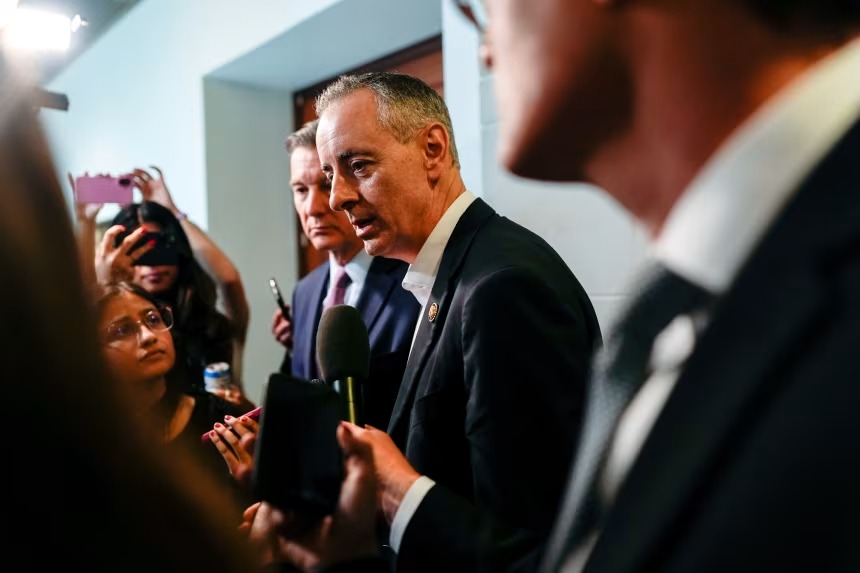
A Republican congressman has vowed to take legislative action to block a newly established $1.776 billion “Anti‑Weaponization Fund” created by the U.S. Department of Justice under the Trump administration — an unusually large taxpayer‑funded program designed to compensate individuals who claim they were unfairly targeted by federal investigations or prosecutions.
Pennsylvania Republican Rep. Brian Fitzpatrick, considered one of the more moderate members of his party, announced that he intends to explore ways to dismantle the fund, which has drawn sharp criticism from lawmakers on both sides of the political aisle for its broad scope and lack of clear oversight.
What the Anti‑Weaponization Fund Is
The “Anti‑Weaponization Fund” stems from a settlement between President Donald Trump and the Internal Revenue Service (IRS) after legal disputes related to a leak of his tax returns. As part of that agreement, the Trump Justice Department established a dedicated account worth nearly $1.8 billion intended to provide compensation and other remedies for people who believe they were subjected to politically motivated investigations or prosecutions under prior federal administrations.
Acting Attorney General Todd Blanche has defended the fund’s creation, saying it offers “a lawful process” for people to raise claims and seek redress for perceived unfair legal actions. But critics — including Fitzpatrick — have questioned both the legal basis and the use of taxpayer funds without clear authorization from Congress.
Fitzpatrick’s Challenge
On May 20, 2026, Fitzpatrick sent a letter to Acting Attorney General Blanche seeking detailed information about how the fund was structured, where the money is being diverted from, and what standards will be used to determine eligibility for payments. He said that directing nearly $2 billion into a discretionary account without congressional approval or oversight “represents a dangerous backsliding in the transparency of our institutions and our commitment to the American taxpayer.”
Fitzpatrick has stated that, after reviewing these details, he plans to work with colleagues to craft legislation that would dismantle the fund or prohibit federal dollars from being used for it. His effort marks one of the first public Republican challenges to the Trump administration’s initiative, highlighting growing discomfort among some GOP lawmakers.
Broader Political and Public Response
The fund has drawn criticism not only from Fitzpatrick but also from congressional Democrats and legal experts. Some lawmakers and watchdog groups have called it a political “slush fund” that could redirect taxpayer money toward supporters of the former president or others claiming to have been victims of “weaponized” prosecutions, even though eligibility rules remain vague.
Additionally, two police officers who defended the U.S. Capitol on January 6, 2021 filed a federal lawsuit arguing that the fund could be used to compensate participants in the Capitol attack, which they say would undermine justice and public safety.
Some Trump supporters — including some convicted of involvement in the January 6 events — have publicly celebrated the fund as long overdue and view it as a form of restitution for what they see as politically motivated prosecutions under previous administrations.
Legal and Oversight Questions
Legal analysts say the fund’s creation raises unusual legal and constitutional questions, including whether the executive branch can establish such a large discretionary account without explicit congressional authorization and with broad eligibility standards that are not yet clearly defined. Critics argue that the lack of established criteria may open the fund to misuse or payouts to individuals with controversial backgrounds.
Republican and Democratic lawmakers alike have called for greater transparency and oversight, with some proposing legislation that would prohibit federal funds from being used to implement or maintain the program.
Key Takeaways
- Rep. Brian Fitzpatrick, R‑Pa., is pushing to block the Trump administration’s nearly $1.8 billion “Anti‑Weaponization Fund,” raising concerns about transparency and congressional oversight.
- The fund was established as part of a settlement involving President Trump and the IRS, and is intended to compensate individuals who claim they experienced politically motivated legal actions.
- Fitzpatrick has formally requested detailed information from the Justice Department about the fund’s legal basis, funding source, eligibility rules, and oversight structure.
- Critics from both parties — including lawmakers and law enforcement officers — argue the fund could be misused or even benefit individuals involved in violent events like the January 6 attack.
- Legal experts and lawmakers are calling for clearer rules, formal oversight, or legislation to dismantle or prevent the deployment of taxpayer dollars in this manner.