
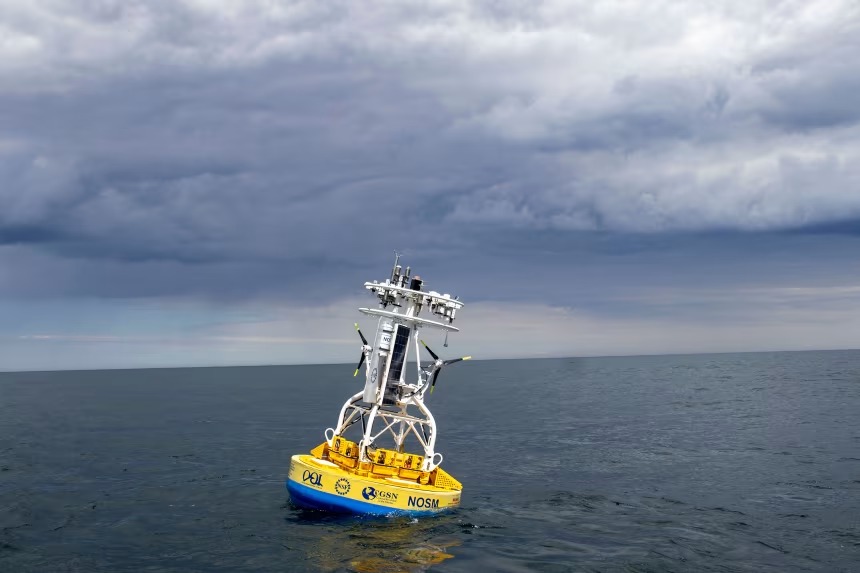
A key ocean monitoring network that tracks one of the planet’s most important climate systems has become the focus of growing concern after reports that budget decisions by the Trump administration could affect its long-term operation. Climate researchers say the monitoring program plays a critical role in understanding global weather patterns, sea-level changes, and the future stability of the Earth’s climate.
The debate has sparked renewed discussion about the importance of scientific observation systems and the role they play in forecasting extreme weather and long-term environmental changes.
What Is the AMOC and Why Does It Matter?
The Atlantic Meridional Overturning Circulation (AMOC) is a vast system of ocean currents that helps regulate temperatures across the globe.
Often described as part of the planet’s “ocean conveyor belt,” the AMOC moves warm surface water northward through the Atlantic Ocean while carrying colder, deeper water back toward the south. This continuous circulation influences weather patterns in North America, Europe, Africa, and beyond.
Scientists consider the system one of the most important drivers of the global climate because changes in its strength can affect rainfall, hurricanes, sea levels, and regional temperatures.
Why Are Researchers Concerned About the Monitoring Program?
The current monitoring network provides scientists with real-time data about the health and behavior of the AMOC.
Researchers rely on a series of underwater instruments, sensors, and observation stations positioned across the Atlantic Ocean to measure water temperatures, salinity, and current strength. These observations help scientists identify long-term trends and improve climate models.
According to experts, interruptions in data collection could create gaps in one of the world’s most valuable climate records, making it more difficult to understand how the circulation system is changing over time.
Many researchers argue that continuous monitoring is essential because ocean systems often evolve gradually, and missing data can reduce the accuracy of future forecasts.
A Scientific Project Decades in the Making
The monitoring effort represents years of international scientific cooperation.
Researchers from multiple countries contribute to maintaining the observation network and analyzing the information it collects. The data has become an important resource for universities, government agencies, and climate research organizations worldwide.
How Could Changes Affect Weather Forecasting?
The AMOC influences a wide range of weather and climate conditions.
Scientists believe changes in the circulation system could affect storm tracks, rainfall distribution, drought conditions, and coastal flooding risks. Some studies suggest that a weaker AMOC could alter weather patterns across parts of Europe and North America.
Monitoring the system helps researchers improve long-range climate projections and better understand how oceans interact with the atmosphere.
Experts emphasize that the observation network does not control the climate itself but provides critical information used to develop more accurate forecasts.
What Role Does Government Funding Play?
Large-scale scientific monitoring projects often depend on long-term government support.
Operating and maintaining ocean observation equipment requires specialized vessels, technical staff, and ongoing maintenance. Budget reductions or program restructuring can affect the ability to replace aging equipment and continue collecting uninterrupted data.
Supporters of the program argue that climate monitoring provides valuable information for agriculture, disaster planning, coastal management, and infrastructure development.
Others contend that funding decisions must balance scientific priorities with broader government spending considerations.
International Cooperation Remains Important
Many climate observation programs operate through partnerships between multiple countries.
Researchers note that collaboration allows scientific institutions to share costs, expertise, and data, strengthening the overall quality of global climate research.
The AMOC monitoring network has become an example of how international scientific cooperation contributes to understanding complex environmental systems.
Why This Issue Extends Beyond Climate Science
The discussion surrounding the monitoring program reaches beyond academic research.
Accurate climate and ocean data help governments, businesses, emergency planners, and local communities make informed decisions about infrastructure, water resources, agriculture, and disaster preparedness.
Scientists argue that maintaining long-term observation systems improves the ability to identify trends before they become major challenges.
The debate also reflects broader questions about how governments invest in scientific research and prepare for future environmental risks.
What Happens Next?
Researchers and policymakers are expected to continue evaluating the future of the monitoring network as budget discussions move forward.
Many scientists hope that the program’s importance to weather forecasting and climate research will encourage continued support. Others believe the conversation highlights the growing need for stable, long-term investment in scientific infrastructure.
Whatever the final decision, the debate has drawn new attention to the critical role oceans play in shaping the planet’s climate.
Key Takeaways
- Scientists are concerned that funding changes could affect a major Atlantic Ocean monitoring program.
- The AMOC helps regulate global weather patterns and climate conditions.
- Continuous data collection is considered essential for accurate climate forecasting.
- Researchers warn that interruptions could create gaps in valuable long-term scientific records.
- The discussion highlights the broader importance of investing in scientific observation systems.
As climate research continues advancing, the future of ocean monitoring may play an increasingly important role in understanding how our planet is changing.