
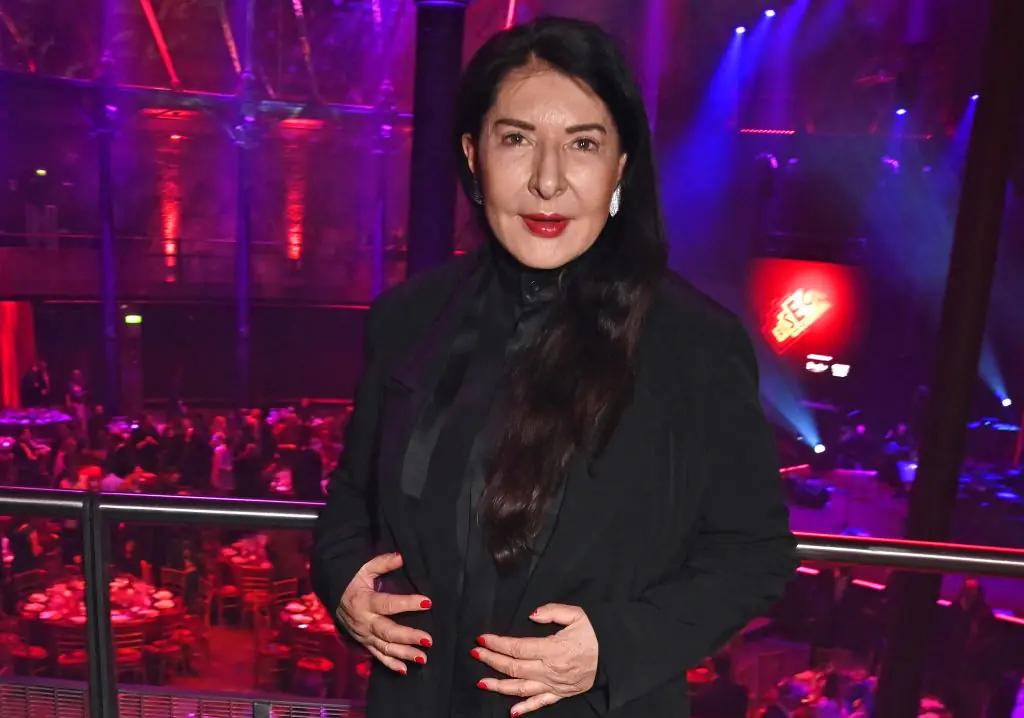
Marina Abramović’s Role Exchange remains one of the most daring performance art pieces of her career because it forced viewers to question identity, fear, labor, money, and public judgment. In 1975, the Serbian performance artist swapped places with a woman working in Amsterdam’s Red Light District while that woman attended Abramović’s exhibition opening at De Appel. The unusual exchange lasted only a few hours, but nearly 50 years later, the work is still discussed as one of Abramović’s boldest attempts to blur the line between art and real life.
Marina Abramović Created Role Exchange in Amsterdam
Marina Abramović created Role Exchange after moving to Amsterdam in the mid-1970s. At the time, she was already building a reputation as an artist willing to use her own body, fear, and vulnerability as part of her work.
The idea came after she noticed women standing in windows in the Red Light District. Abramović later explained that she felt fear and discomfort when thinking about that kind of public exposure.
Instead of avoiding the fear, she decided to confront it through performance. This became one of the central patterns in her career: turning personal fear into a public artwork.
For Role Exchange, Abramović found a woman known as Suze, who had years of experience working in that environment. The two women agreed to switch places for a limited time.
Abramović stood in Suze’s window, taking her place in the public-facing setting. Meanwhile, Suze attended the opening of Abramović’s exhibition at De Appel, stepping into the artist’s professional world.
The performance was not staged like a play. It was a real-time exchange of social roles, public spaces, and personal risk.
What Happened During the Role Exchange Performance?
During Role Exchange, Abramović and Suze swapped their usual positions in society. Abramović entered the window space in Amsterdam’s Red Light District, while Suze appeared at the art exhibition opening as the invited artist.
The exchange lasted a few hours, but the concept was powerful because each woman entered a world normally closed to her. Abramović left the protected space of the gallery and placed herself in a public commercial environment.
Suze, meanwhile, entered the formal art world. She stood in the gallery setting where critics, viewers, and art professionals expected to meet Abramović.
Both women were observed, but in very different ways. Abramović was seen through the public window, while Suze was seen inside the art institution.
That contrast was the heart of the performance. The work asked viewers to think about who is watched, who is judged, who is paid, and who is considered respectable.
Abramović and Suze also shared the artist fee from the exhibition. That detail made the exchange more than symbolic. It directly connected money, labor, and value.
Why Was the Performance Considered So Scary?
The performance was scary for Abramović because it placed her inside a situation she personally feared. She was not simply acting a role on a stage. She was entering a real public environment where strangers could see her through the window.
For many artists, fear is something to avoid. For Abramović, fear became material.
She has often used performance to test mental and physical limits. In Role Exchange, the limit was not pain in the usual sense. It was exposure, judgment, identity, and social discomfort.
The performance forced her to experience how it felt to be looked at differently. In the gallery, an artist may be admired, analyzed, or praised. In the Red Light District, a woman in a window may be judged, desired, ignored, or misunderstood.
That shift was emotionally intense because it changed the meaning of being visible. The same body in a different setting carried a completely different public interpretation.
This is why Role Exchange still feels unsettling. It reveals how strongly society judges people based on context rather than humanity.
What Was Abramović Trying to Say?
Abramović was exploring how identity changes when a person changes social position. By swapping roles with Suze, she questioned whether status, respect, and value are tied to the person or the setting around them.
The performance also challenged the art world. Abramović moved art outside the clean, controlled gallery and into a real urban environment.
At the same time, Suze brought the outside world into the gallery. Her presence at the exhibition disrupted expectations about who belongs in an art institution.
The work asked a difficult question: why is one form of public display called art, while another is treated with shame or judgment?
Abramović was also examining labor and exchange. Both women were working in different public systems. One worked in the art economy, the other in a commercial personal-service setting.
By switching places and splitting the fee, Abramović made viewers think about how society values different kinds of work.
The performance did not give easy answers. Instead, it created discomfort and allowed that discomfort to become the artwork.
Why Role Exchange Still Feels Relevant Today
Role Exchange still feels relevant because society continues to judge people based on appearance, work, gender, and public visibility. The performance may have happened in 1975, but its questions remain modern.
Today, people constantly perform versions of themselves online. Social media has turned visibility into a form of currency, and public image can shape how someone is treated.
Abramović’s work feels surprisingly connected to that world. She understood long before Instagram and TikTok that being watched changes the meaning of the person being watched.
The performance also connects to modern conversations about women’s bodies, labor, and respect. People still debate who is allowed to be visible, who is judged for being visible, and who profits from that visibility.
The art world itself is still questioned for its gatekeeping. Who gets invited into galleries? Whose experiences are seen as serious art? Whose labor is ignored?
By placing Suze in the gallery and herself in the window, Abramović disrupted those divisions in a direct and unforgettable way.
How the Work Was Recorded and Remembered
Role Exchange was recorded with cameras so that both sides of the swap could later be shown together. This was important because the performance happened in two separate places at the same time.
The documentation allowed audiences to compare the two experiences. One woman was in the public window, while the other was in the gallery space.
Over time, the work has been shown through video, photographs, and museum presentations. It is often discussed as part of Abramović’s larger history of testing endurance, vulnerability, and audience perception.
The original performance could not be fully repeated in the same way because its power came from a specific time, place, and social situation.
That is one of the challenges of performance art. The live moment disappears, but the idea remains through documentation, memory, and discussion.
In Role Exchange, the documentation matters because it preserves a rare moment when two women temporarily stepped into each other’s public identities.
Marina Abramović’s Career Built on Risk
Marina Abramović’s career has always been built around risk, discipline, and testing human limits. Her performances often ask the audience to confront discomfort rather than simply look at something beautiful.
She became famous for works that involved stillness, pain, danger, silence, trust, and endurance. Instead of using paint or sculpture as her main material, she used her body and presence.
That approach changed how many people understood performance art. Abramović turned live action into a serious artistic language.
Role Exchange fits perfectly into that career because it was not only about shock. It was about transformation.
The performance asked what happens when a person steps into another person’s world, even briefly. It also showed that fear can reveal hidden social rules.
Abramović’s work remains controversial because it often makes viewers uncomfortable. But that discomfort is usually the point.
Why This Performance Still Sparks Debate
This performance still sparks debate because it touches on sensitive issues such as class, gender, public display, and the power difference between artist and subject. Some viewers see the work as brave and thought-provoking.
Others question whether such an exchange can ever be equal, especially when one participant comes from the art world and the other from a more vulnerable social position.
That debate is part of why the work remains important. It does not sit quietly in art history. It still makes people argue about ethics, privilege, and representation.
Abramović’s defenders say the work exposed social hypocrisy by showing how judgment changes depending on location. Critics may ask whether the performance used another woman’s life as material.
Both readings can exist at the same time. The strongest art often creates difficult questions without giving comfortable answers.
Role Exchange continues to matter because it refuses to let viewers stay neutral. It asks them to look at their own assumptions about work, respect, visibility, and fear.
Key Takeaways
- Marina Abramović created Role Exchange in Amsterdam in 1975.
- The performance involved Abramović swapping places with Suze, a woman from the Red Light District.
- Abramović stood in Suze’s window while Suze attended the artist’s exhibition opening at De Appel.
- The work explored identity, labor, public judgment, fear, and the value society gives to different roles.
- Nearly 50 years later, Role Exchange remains one of Abramović’s most discussed and controversial performance pieces.
Marina Abramović’s Role Exchange still shocks people because it turns a simple swap into a powerful question: how much of a person’s value is shaped by who they are, and how much is shaped by where society chooses to place them?