
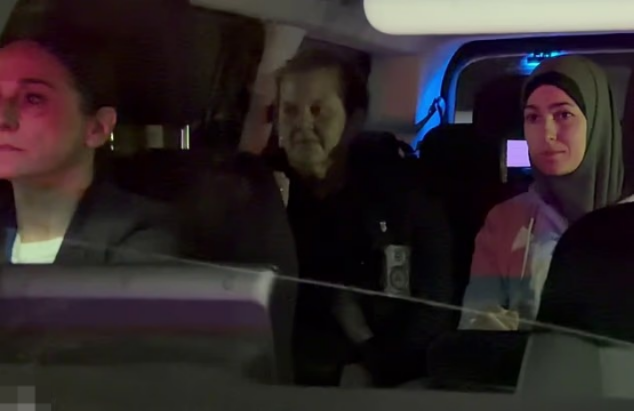
Janai Safar has been refused bail after returning to Australia from Syria and appearing before a Sydney court on serious terrorism-related charges. The 32-year-old was arrested at Sydney Airport after arriving with other Australians who had spent years in a Syrian detention camp. Prosecutors argued the case against her was strong, while her lawyer said she had lived in harsh camp conditions for years and needed medical support.
Janai Safar Appears in Sydney Court
Safar appeared before a NSW bail court after being arrested shortly after arriving in Australia. She was charged with entering or remaining in a declared area and being a member of a terrorist organisation.
Each charge carries a possible maximum sentence of 10 years in prison. Safar appeared by video link from custody while her lawyer applied for bail.
The court heard that she had returned from Syria with her young son after spending years in Roj camp, a detention camp in northeast Syria where many women and children linked to former Islamic State fighters have been held.
Her return has become part of a wider national debate in Australia about security, children born or raised in conflict zones, and whether adults who travelled to Syria should be allowed back into the country.
Judge Refuses Bail Application
Judge Daniel Covington refused Safar’s bail application, finding that she had not met the “exceptional circumstances” test required for release. She will remain in custody while the case continues.
Her lawyer, Michael Ainsworth, argued that she was not a flight risk because the temporary passport used for her return had been confiscated.
He also said Safar had spent years in extremely harsh conditions in a refugee-style camp and was likely dealing with trauma-related mental health issues, along with physical health problems linked to the conditions there.
The defence argued that any alleged offending effectively ended years ago when she left Raqqa and later ended up in camp custody.
However, prosecutors opposed bail and argued the case was strong enough that she should remain behind bars.
Prosecutors Say Case Is Strong
Prosecutors alleged Safar intentionally travelled to Syria and remained in a declared area connected to Islamic State activity.
The Crown case reportedly includes messages allegedly sent by Safar to her mother while she was in Syria. Prosecutors said those messages supported the allegation that she had gone there with the intention of joining Islamic State.
The prosecution argued that the organisation was designated as a terrorist group by the Australian government and had been involved in violent conflict across the Middle East.
They also argued that Safar took steps to become a member of the group or was in fact a member.
The defence challenged how active her involvement may have been, suggesting there would be questions about degree, pressure, coercion, and whether she acted under duress during her time in the region.
Her Lawyer Points to Years in Camp
Safar’s lawyer told the court she had been in a camp for about nine years and had already spent a long period in conditions that were effectively restrictive.
He argued that her son also faced difficulties after arriving in Australia and knew very few people in the country.
The defence said medical treatment and support would be easier if Safar was released on bail.
This argument placed the case in a difficult space between national security concerns and humanitarian concerns, especially because children were involved in the return group.
Still, the judge was not satisfied that the legal threshold for bail had been met.
Wider Return From Syria Sparks Political Debate
Safar was one of several Australians who returned from Syria. Reports said four women and nine children arrived in Australia after years in Roj camp. Three women faced charges after arriving, including Safar.
The return has sparked a political storm. Prime Minister Anthony Albanese said he had sympathy for the children involved, but not for adults who made the decision to travel to Syria.
Australian authorities have said anyone suspected of breaking the law would face the legal process after returning.
The case has also raised questions about temporary exclusion orders, monitoring, community safety, and what support will be provided to children who spent formative years in detention-camp conditions.
Why the Case Is So Sensitive
The case is sensitive because it combines national security, family separation, children, detention camps, and allegations connected to a listed terrorist organisation.
Supporters of repatriation argue that children should not be left in dangerous overseas camps because of choices made by adults.
Critics argue that adults who allegedly supported or joined extremist groups should not return without strict legal consequences.
Safar’s case now sits directly inside that debate. The court has not decided guilt or innocence, but it has decided she should remain in custody while the charges proceed.
Her case is expected to return to court in July.
Key Takeaways
- Janai Safar, 32, was arrested after returning to Australia from Syria.
- She has been charged with entering or remaining in a declared area and being a member of a terrorist organisation.
- A Sydney court refused her bail application after finding she did not meet the exceptional circumstances test.
- Prosecutors argued the case against her was strong.
- Her lawyer said she had spent years in harsh camp conditions and needed medical support.
- The case is part of a wider Australian debate about citizens returning from Syrian detention camps.
Janai Safar’s bail refusal shows how complex these return cases have become, with courts balancing serious security allegations against years of hardship, family concerns, and the future of children brought back from Syria.