
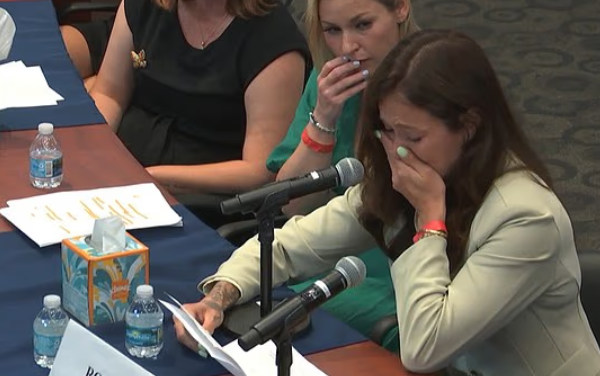
A new Jeffrey Epstein survivor testimony has renewed public pressure for full accountability after women spoke at a House Oversight Committee field hearing in Palm Beach, Florida. One survivor, identified as Roza, became emotional as she described how Epstein allegedly continued exploiting young women even after his 2008 plea deal placed him under house arrest.
Survivor Roza Shares Emotional Testimony in Palm Beach
Roza told lawmakers she was brought to the United States from Uzbekistan in 2008 by late French modeling agent Jean-Luc Brunel, a close Epstein associate. She said she believed she was entering the country for legitimate modeling opportunities, but later found herself trapped in Epstein’s circle.
During the hearing, Roza described being sent to Epstein’s Palm Beach mansion while he was under house arrest. She alleged he used her immigration status, money pressure, and power to control her over several years.
Her testimony became especially emotional when she spoke about how the experience affected her life and privacy. She also said later document releases exposed personal details that should have remained protected.
Why Did Epstein’s 2008 Plea Deal Face New Criticism?
Epstein’s 2008 plea deal faced renewed criticism because survivors and lawmakers say it allowed him to keep access to vulnerable young women. The agreement let him serve 13 months with work-release privileges, meaning he was allowed to leave custody during the day.
Lawmakers at the hearing argued that the deal failed to protect victims and gave Epstein unusual leniency. Democrats on the House Oversight Committee also released findings titled “The Price of Non-Prosecution,” focused on how the agreement affected later exploitation claims.
For survivors, the issue is not only what Epstein did, but how institutions handled warnings, evidence, and victims’ safety.
Alleged Boast Adds to Public Anger
One of the most disturbing parts of Roza’s testimony involved her claim that Epstein bragged about receiving visits from young women while he was in custody. She said the remark showed how little fear he had of consequences.
The claim has fueled public anger because Epstein was already supposed to be under legal restrictions. If true, it raises serious questions about supervision, oversight, and whether powerful connections helped him avoid meaningful accountability.
Roza also alleged that she was made to work at Epstein’s science foundation as a way to offset a claimed debt. That detail added to concerns about how financial control may have been used against vulnerable people.
Survivors Demand Transparency From Government Agencies
The Palm Beach hearing also focused on how federal agencies handled Epstein-related records. Survivors said the release of certain documents caused fresh harm when names or identifying details were not properly protected.
Some witnesses said the government’s handling of the files forced survivors to relive painful experiences in public. Lawmakers promised to continue pushing for transparency while also protecting victim privacy.
The hearing included testimony from other survivors and family members connected to the case. Their message was clear: accountability should not stop with Epstein.
Powerful Names Remain Under Scrutiny
Epstein’s network has long raised questions because of his access to wealthy, famous, and politically connected people. At the hearing, lawmakers said they would continue investigating how financial systems, immigration loopholes, and influential associates may have helped his operation continue.
Ghislaine Maxwell remains the only close associate convicted in connection with Epstein’s trafficking operation. She is serving a 20-year sentence.
Survivors and advocates say that is not enough. They want deeper answers about who enabled Epstein, who ignored warnings, and why accountability has moved so slowly.
Key Takeaways
- Epstein survivor Roza gave emotional testimony at a Palm Beach House Oversight hearing.
- She said Epstein continued exploiting young women after his 2008 plea deal.
- Lawmakers criticized the lenient agreement and its long-term consequences.
- Survivors also raised concerns about mishandled government records.
- The hearing renewed calls for transparency and accountability beyond Epstein himself.
The Epstein case continues to raise difficult questions about power, protection, and whether survivors will ever receive the full accountability they have demanded for years.