
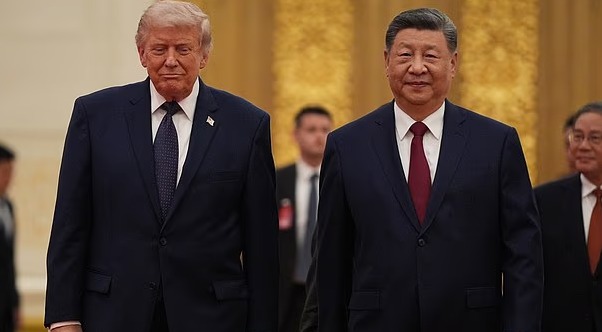
Donald Trump and Chinese President Xi Jinping have agreed that the Strait of Hormuz must remain open as new ship attacks near the vital waterway increase global concern. The agreement came during Trump’s China visit, where Iran, energy security, and stalled peace efforts became major topics.
Trump-Xi Meeting Focuses on Hormuz Crisis
The White House said Trump and Xi agreed that the Strait of Hormuz should stay open and that Iran should not obtain nuclear weapons. The message came as shipping tensions continued near one of the world’s most important energy routes.
The meeting in Beijing was important because China is close to Iran and remains a major buyer of Iranian oil. That gives Beijing influence at a moment when Washington wants pressure on Tehran to prevent further disruption.
Why Does the Strait of Hormuz Matter So Much?
The Strait of Hormuz matters because around one-fifth of the world’s oil supply passes through it. If ships cannot move safely, energy prices, supply chains, and global markets can quickly feel the pressure.
U.S. Treasury Secretary Scott Bessent said China has a strong interest in reopening the strait because it depends on the route for energy flows. He suggested China may use its influence with Iran to help keep the passage open.
New Ship Incidents Add to Global Alarm
The diplomatic push came as new attacks were reported on ships near Hormuz. Reuters reported that one Indian-flagged vessel was attacked off Oman, while another ship was reportedly taken near the UAE coast and headed toward Iranian waters.
These incidents show why the crisis remains dangerous even while leaders talk. Every new attack raises insurance costs, shipping fears, and pressure on governments to secure the route.
Iran Allows Some Chinese Vessels Through
Iran has reportedly started allowing certain Chinese vessels to pass through the Strait of Hormuz after talks with Beijing. Reuters reported that the move followed diplomatic requests from China and was linked to coordination rules for the waterway.
This detail matters because it suggests China may already be getting special access while wider shipping remains uncertain. It also shows how Iran may be using the strait as both a security tool and a diplomatic bargaining chip.
U.S. Wants China’s Help on Iran
Washington appears to be looking for Chinese cooperation because Beijing has economic ties with Tehran that the U.S. does not. China wants the strait open, but it also views Iran as a strategic partner and a counterweight to U.S. power.
That makes China’s position complicated. It may help reduce shipping disruption, but it is unlikely to fully support every U.S. demand against Iran.
Key Takeaways
- Trump and Xi agreed the Strait of Hormuz must remain open.
- New ship incidents near the waterway have raised global concern.
- China has strong energy reasons to pressure Iran.
- Iran has reportedly allowed some Chinese vessels to pass.
- The crisis remains tense despite diplomatic talks.
The next major question is whether China can turn its influence with Iran into real protection for global shipping.