
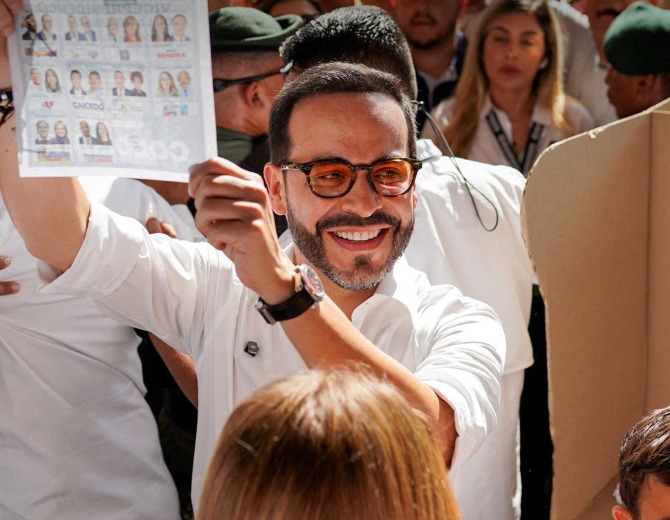
Colombia is heading toward one of its most closely watched presidential runoff elections in years after right-wing candidate Abelardo de la Espriella and leftist senator Iván Cepeda emerged as the top contenders in the first round of voting. The result has intensified political tensions across the country and could reshape Colombia’s future on security, economic policy, and international relations.
Neither candidate secured the majority needed to win outright, forcing a runoff election scheduled for June 21. With millions of voters now deciding between two sharply different political visions, the campaign is expected to become one of the most polarizing contests in recent Colombian history.
Abelardo de la Espriella Takes Surprise Lead in First Round
Abelardo de la Espriella delivered one of the biggest surprises of the election by finishing first in the initial vote count. Preliminary results showed the conservative outsider receiving roughly 43.7% of the vote, slightly ahead of Iván Cepeda, who secured around 40.9%.
The lawyer and political newcomer built his campaign around promises to crack down on crime, strengthen law enforcement, and reverse several policies associated with outgoing President Gustavo Petro. His tough rhetoric on public security resonated with many voters concerned about rising violence and instability in parts of the country.
De la Espriella has frequently drawn comparisons to leaders who support aggressive anti-crime strategies. During the campaign, he proposed measures including larger prison facilities and stronger action against criminal organizations and armed groups.
His strong performance exceeded many polling expectations and immediately positioned him as a major contender heading into the final round.
What Does Iván Cepeda Stand For?
Iván Cepeda enters the runoff as the leading candidate from Colombia’s progressive political movement and the preferred successor to President Gustavo Petro’s governing coalition. He has campaigned on expanding social reforms, improving healthcare access, and continuing negotiations aimed at reducing armed conflict.
Cepeda’s supporters argue that Colombia should continue pursuing peace agreements and social investment rather than relying primarily on tougher security policies. They believe long-term stability depends on addressing inequality, rural development, and access to public services.
Although Cepeda finished behind de la Espriella in the first round, the margin between the two candidates remains relatively narrow. Political analysts note that runoff elections often produce different outcomes because supporters of eliminated candidates become critical to determining the winner.
Cepeda has expressed confidence that he can build a broader coalition before the June runoff and convince undecided voters that his platform offers a more stable future for the country.
Why Is Colombia’s Election Becoming So Polarized?
The runoff is increasingly being viewed as a referendum on the direction of Colombia after President Petro’s administration. Voters appear deeply divided over issues including public security, economic reform, and the government’s approach toward armed groups operating across the country.
Security Has Become the Central Issue
For many Colombians, rising concerns about violence have become one of the defining issues of the election. Critics of the current government argue that peace negotiations with criminal organizations have not delivered the results many citizens expected.
De la Espriella has capitalized on these concerns by promising a tougher security strategy. His campaign frequently highlights the need to restore order and strengthen state authority in areas affected by criminal activity.
Competing Visions for Colombia’s Future
The two candidates offer sharply different paths forward. De la Espriella advocates a more conservative and security-focused government, while Cepeda supports continued progressive reforms and negotiations aimed at reducing conflict through political solutions.
The result could significantly influence Colombia’s domestic policies as well as its relationships with regional governments and international partners, including the United States.
Could Other Candidates Decide the Runoff?
One of the biggest questions heading into the second round involves voters whose preferred candidates failed to advance. Conservative candidate Paloma Valencia finished a distant third despite entering parts of the campaign as a major contender. She has since endorsed de la Espriella, potentially strengthening his position.
Meanwhile, several centrist figures have not yet fully committed to supporting either finalist. Their voters could become a decisive force in determining who wins the presidency.
Political observers note that Colombian runoff elections often produce significant shifts because candidates must expand beyond their core supporters. Both campaigns are now expected to aggressively target moderate and independent voters over the coming weeks.
Questions Over Election Results Add New Tension
The election has also generated controversy after members of the ruling political movement raised concerns about possible voting irregularities. Cepeda and some allies called for additional review of vote counts before fully accepting the first-round outcome.
De la Espriella rejected those concerns and defended the integrity of the voting process. Election authorities have continued reviewing results according to established procedures.
Although election day remained largely peaceful, the disagreement has added another layer of tension to an already highly charged political environment. Analysts expect scrutiny of the electoral process to remain intense until the final runoff concludes later this month.
Key Takeaways
- Colombia’s presidential election is heading to a runoff on June 21.
- Abelardo de la Espriella finished first in the opening round with roughly 43.7% of the vote.
- Iván Cepeda secured second place with about 40.9% and remains a strong contender.
- Public security, crime, and social reforms have become the central issues of the campaign.
- Supporters of eliminated candidates could play a decisive role in determining the final result.
With Colombia now facing a stark choice between two very different political visions, the upcoming runoff could become one of the most consequential elections in the country’s recent history.