
Christine Dawood has shared one of the most heartbreaking details from the Titan submersible tragedy, revealing that the remains of her husband and son were returned to her nine months after the disaster in two small boxes. Her husband, Shahzada Dawood, 48, and their 19-year-old son, Suleman Dawood, were among five people killed when OceanGate’s Titan submersible imploded during a dive to the Titanic wreck in June 2023. Nearly three years later, Christine’s account has brought renewed attention to the human cost behind one of the most widely followed deep-sea tragedies in recent memory.
Christine Dawood Describes Receiving Her Family’s Remains
Christine Dawood said the remains of her husband and son were returned to her around nine months after the Titan implosion. In a deeply emotional interview, she explained that what came back was not a traditional recovery of bodies, but small amounts of material that had been identified through careful DNA testing.
She described the containers as being similar in size to shoeboxes. Her words were painful because they revealed the brutal reality of what a catastrophic deep-sea implosion leaves behind.
The U.S. Coast Guard reportedly tested the recovered material to identify what belonged to Shahzada and Suleman. Christine said there was not much that could be recovered, and authorities also told her there were mixed remains that could not be separated by identity.
She chose not to accept anything that could not be confirmed as belonging to her husband or son. Instead, she only wanted what officials could clearly identify as Shahzada and Suleman.
That decision shows the emotional difficulty families face after disasters where recovery is complicated. For Christine, even receiving the remains did not offer a normal kind of closure. It was another painful step in a grief process that had already stretched across months of waiting.
What Happened to the Titan Submersible?
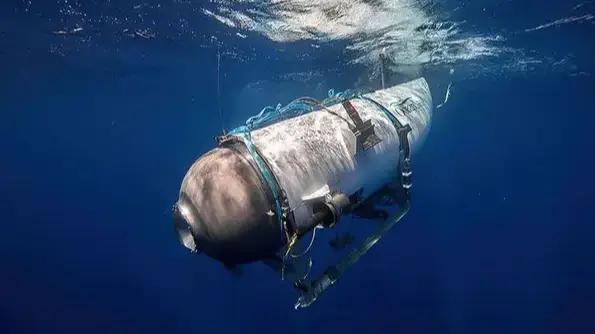
The Titan submersible imploded during a dive to the Titanic wreck site in the North Atlantic Ocean on June 18, 2023. The vessel was operated by OceanGate and was carrying five people when it lost contact with its support ship, the Polar Prince.
On board were Shahzada Dawood, his son Suleman Dawood, British explorer Hamish Harding, French Titanic expert Paul-Henri Nargeolet, and OceanGate CEO Stockton Rush.
The group had joined a deep-sea expedition to view the wreck of the Titanic, which lies more than 12,000 feet below the ocean surface. The dive was meant to be an extraordinary adventure, but it ended in disaster.
The submersible lost communication less than two hours into its descent. For several days, search teams from multiple countries worked urgently while the world followed the story in real time.
At first, there was hope that the passengers might still be alive inside the vessel with limited oxygen. But when debris was found near the Titanic wreck, officials concluded that the Titan had suffered a catastrophic implosion.
The nature of the implosion meant everyone on board is believed to have died instantly. For Christine, that detail later became one of the only sources of comfort, because it meant her husband and son likely did not suffer.
Why Christine Gave Her Seat to Suleman
Christine was originally meant to go on the Titan dive with her husband, Shahzada. However, she later gave her place to their son Suleman so father and son could experience the Titanic trip together.
That detail became one of the most emotional parts of the tragedy. Suleman was only 19 and had reportedly been excited to share the experience with his father.
Christine has spoken about the pain of knowing she was supposed to be on the vessel. But she has also been advised not to live inside “what if” questions, because those thoughts can become impossible to escape.
The decision to give Suleman her seat was made out of love. It was not a careless choice or something anyone could have known would end in disaster.
Still, for a grieving mother and wife, that knowledge does not erase the emotional weight. Christine lost both her husband and her child in one moment, while she remained on the surface waiting for news.
Her story shows how tragedy can leave survivors carrying questions that have no satisfying answer. Even when someone did nothing wrong, grief can still attach itself to decisions made before everything changed.
The Painful Wait During the Search
The days after the Titan disappeared were filled with confusion, fear, and fading hope. Christine was among those waiting for updates while search teams tried to locate the missing submersible.
At the time, public attention was intense. News channels, social media users, experts, and online commentators followed every development, often speculating about oxygen levels, rescue chances, and possible outcomes.
For the families, that global attention made an already unbearable situation even harder. They were not just waiting for private news; they were grieving and hoping while the entire world watched.
Christine later described the emotional strain of those hours and days. The uncertainty was cruel because it allowed hope to remain alive even when the reality may already have been final.
When officials confirmed that the debris was consistent with a catastrophic implosion, the search shifted from rescue to recovery and investigation. For the families, the announcement ended one kind of waiting but began another.
Christine then had to wait months before confirmed remains were returned. That long delay added another layer to the trauma, because even after the world moved on from the breaking news, her family’s grief continued in private.
OceanGate Safety Questions Remain Central
The Titan tragedy also raised major questions about OceanGate, deep-sea tourism, and the safety of experimental submersibles. Before the disaster, concerns had reportedly been raised about Titan’s design, testing, and certification.
The vessel was unusual because it was built with a carbon-fiber hull, a material that some experts had questioned for repeated deep-sea pressure exposure. The extreme depth of the Titanic wreck means any weakness in a pressure vessel can become catastrophic.
After the implosion, investigators examined whether warnings had been ignored and whether stronger oversight could have prevented the disaster. The tragedy became a turning point in public discussion about private adventure tourism and high-risk expeditions.
Christine has also criticized aspects of OceanGate’s response, including the way communication felt during the search period. For families waiting for answers, tone and transparency matter deeply.
The disaster highlighted a troubling question: how much risk should companies be allowed to take when selling extreme experiences to paying passengers?
The Titan was not just a machine that failed. It carried real people with families, futures, and loved ones waiting on the surface.
How Christine Dawood Is Processing Her Grief
Christine Dawood has been open about the long and complicated process of grieving two different losses at once. Losing a spouse and losing a child are both devastating, but she has described them as separate forms of grief.
Her grief for Shahzada is tied to partnership, shared life, and the future they expected to have together. Her grief for Suleman carries the unbearable pain of a parent losing a child at the beginning of adulthood.
She has also spoken about protecting her daughter from the overwhelming media attention that followed the tragedy. For a surviving child, losing a father and brother so publicly created a level of pain few people can fully understand.
One of the memorial details Christine has shared is Suleman’s completed 9,090-piece Lego Titanic. The model now carries a heartbreaking meaning because it connects his interest in the Titanic with the journey that took his life.
Christine’s grief has not remained only private. She has also discussed plans connected to helping others through grief, including work inspired by Suleman’s memory.
That desire to turn pain into support does not make the loss easier, but it shows how survivors sometimes search for purpose after tragedy.
Why Her Story Still Matters Years Later
Christine Dawood’s story still matters because the Titan disaster was not only a headline about technology, wealth, or deep-sea exploration. It was a human tragedy that left families permanently changed.
When the story first broke, much of the conversation focused on the missing submersible, the rescue effort, the cost of the trip, and OceanGate’s design choices. Those details were important, but they could also make the victims feel distant.
Christine’s account brings the focus back to the people left behind. It reminds readers that behind every viral disaster are families who continue living with the aftermath long after the news cycle ends.
Her description of receiving the remains in small boxes is difficult to hear, but it explains the true scale of the loss more powerfully than technical reports ever could.
The Titan tragedy also remains important because it raises questions about risk, regulation, and responsibility. Exploration has always involved danger, but companies offering extreme experiences must be held to the highest safety standards.
For Christine, the issue is not only about the past. It is about memory, accountability, and making sure the lives lost are not reduced to a short-lived media event.
Key Takeaways
- Christine Dawood lost her husband Shahzada and son Suleman in the Titan submersible implosion in June 2023.
- She said their identified remains were returned around nine months later in two small boxes.
- Christine had originally been expected to join the dive but gave her seat to Suleman so he could go with his father.
- The Titan implosion killed all five people on board, including OceanGate CEO Stockton Rush.
- Her story has renewed attention on grief, deep-sea tourism safety, and the lasting impact of the tragedy on victims’ families.
Christine Dawood’s account is a heartbreaking reminder that the Titan disaster was not only a story about a failed vessel, but about families left to carry a loss that no investigation or headline can undo.