
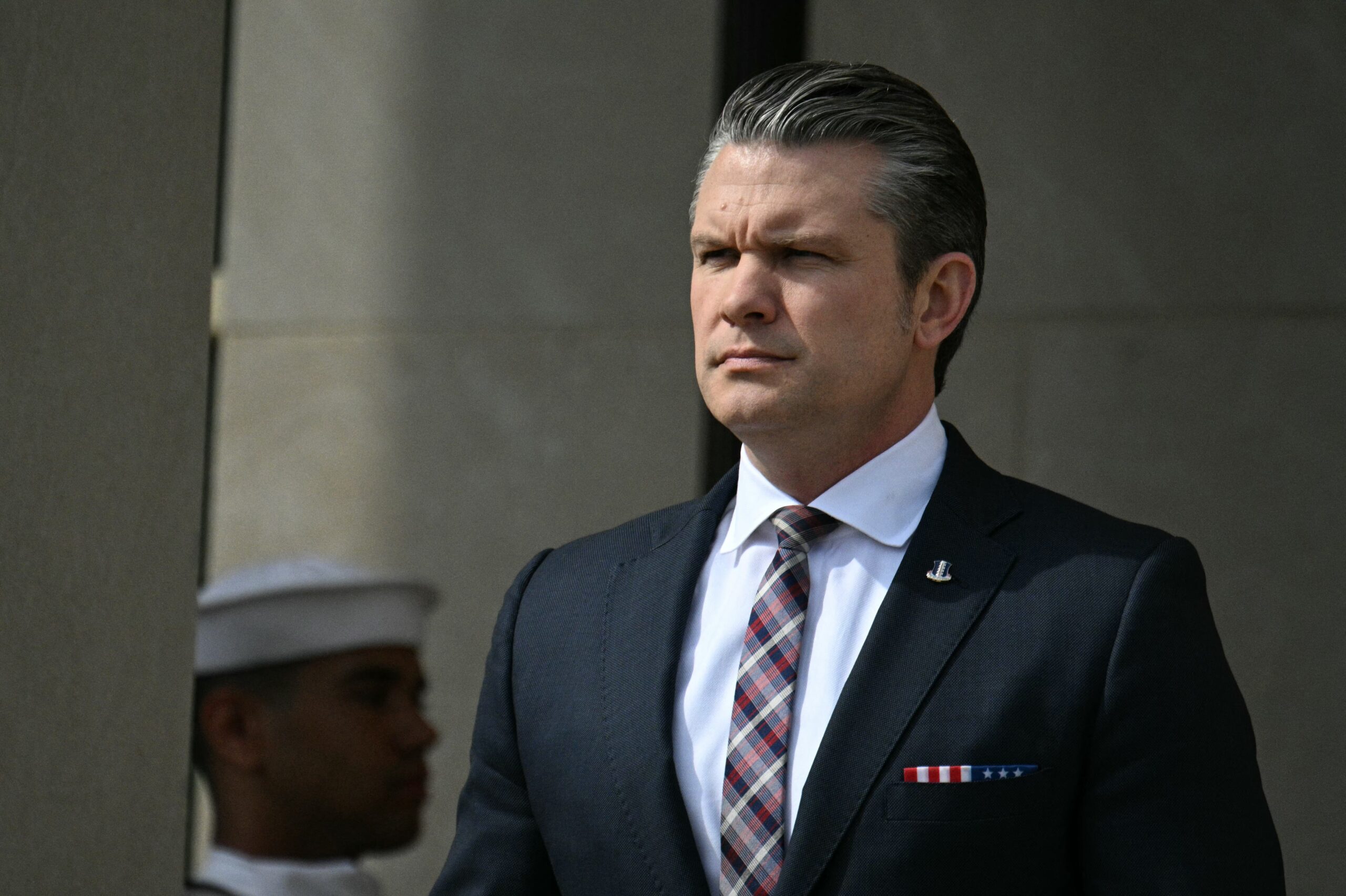
Pete Hegseth has sparked a fresh political and religious debate after using a dramatic line linked to Pulp Fiction during a Pentagon prayer service. The moment drew attention because the words were presented in the style of a Bible passage, but listeners quickly noticed that the wording closely resembled Samuel L. Jackson’s famous speech from Quentin Tarantino’s 1994 film. The controversy has raised questions about scripture, pop culture, military tradition, and the way public officials use religious language in official settings.
Pete Hegseth’s Pentagon Prayer Service Draws Attention
Pete Hegseth drew attention after leading a prayer service at the Pentagon and delivering a passage that sounded familiar to movie fans. The line was connected to Ezekiel 25:17, a Bible verse made famous in a heavily stylized form by Pulp Fiction.
The issue was not simply that Hegseth referenced a movie. The controversy came from the way the passage appeared to blend religious language, military imagery, and a fictionalized film quote during a formal Pentagon event.
The prayer reportedly included language about a “downed aviator,” “camaraderie and duty,” “the valley of darkness,” and striking down those who tried to capture or destroy a brother. The wording closely echoed the structure and tone of the famous Pulp Fiction monologue.
Hegseth said the prayer was connected to a Combat Search and Rescue tradition known as CSAR 25:17. The phrase appeared to honor a mission involving the rescue of a downed airman.
Supporters saw the moment as a tribute to military courage and rescue teams. Critics saw it as an inappropriate mix of scripture, violence, and Hollywood dialogue inside a government setting.
What Is the Pulp Fiction Bible Quote Controversy?
The controversy centers on the fact that the famous Pulp Fiction version of Ezekiel 25:17 is not a direct Bible quote. In the movie, Samuel L. Jackson’s character Jules Winnfield recites a dramatic passage before violent scenes, presenting it as scripture.
However, the film version is mostly fictionalized. It uses some biblical-style language and a small part connected to Ezekiel 25:17, but much of the wording was written for cinematic effect.
That difference matters because many people recognize the line as part of pop culture, not as an accurate reading of the Bible. When Hegseth used a similar structure at a Pentagon prayer event, critics argued that it blurred the line between real scripture and movie dialogue.
The actual Bible verse is much shorter and does not contain many of the famous lines from the film. The movie version adds phrases about the “righteous man,” the “tyranny of evil men,” and the shepherding of the weak through darkness.
In Hegseth’s version, the language was reportedly adapted again to fit military rescue themes. That created another layer of confusion because it was not purely biblical and not purely a film quote either.
For critics, the problem was the setting. A movie-inspired line might be harmless in a speech or casual reference, but using it during a prayer service at the Pentagon made the moment more sensitive.
Why Critics Said the Moment Was Misleading
Critics said the moment was misleading because some listeners could have believed the prayer was based directly on scripture. Religious language carries weight, especially when used by a senior government official during a formal service.
The backlash came from several directions. Some objected on religious grounds, saying scripture should not be mixed with a fictional movie speech. Others objected politically, arguing that the moment reflected a troubling blend of militarism and religious performance.
The use of violent language also drew criticism. Prayers in military contexts can be deeply meaningful for service members, families, and rescue teams, but language about vengeance and wrath can become controversial when connected to real-world conflict.
Because Pulp Fiction is known for stylized violence, the reference also felt strange to many observers. A line made famous by a fictional hitman became part of a prayer connected to military service, which made the moment easy for critics to mock.
Some online users called it embarrassing, while others argued that it showed poor judgment. Religious commentators also questioned why a public official would use a fictionalized passage instead of reading directly from the Bible.
The reaction grew because Hegseth is already a polarizing public figure. Any unusual statement from him is likely to receive close attention from both supporters and opponents.
Pentagon Defends the Prayer and Its Meaning
The Pentagon defended the prayer by saying it was not meant to mislead anyone about scripture. Officials argued that the words were inspired by a long-running military-style tradition connected to combat search and rescue, rather than an attempt to falsely quote the Bible.
Pentagon spokesperson Sean Parnell dismissed some criticism as misinformation and said the prayer was tied to the mission and the bravery of those involved. The defense focused on the idea that the wording was symbolic and mission-specific.
According to that explanation, the prayer was not meant to be a straight Bible reading. It was meant to honor service members who risked their lives to save others.
Supporters of Hegseth also argued that the outrage was overblown. They said critics were focusing on the pop-culture connection instead of the message of loyalty, rescue, and sacrifice.
Still, the defense did not fully end the controversy. Even if the reference was intentional, critics said the setting still made it inappropriate.
That divide is why the story continued to spread. One side saw a dramatic tribute to military courage. The other saw a senior official using a movie line with biblical packaging during an official religious event.
Why Pulp Fiction’s Ezekiel Line Is So Famous
The Pulp Fiction Ezekiel line is famous because it is one of the most memorable monologues in modern cinema. Samuel L. Jackson’s delivery made the passage sound intense, mysterious, and almost scriptural, even though much of it was created for the film.
In the movie, the character Jules uses the line as a ritual before violent acts. Later, he reflects on its meaning and begins to question his life. That shift is part of why the quote became iconic.
The line’s power comes from performance, rhythm, and moral imagery. It sounds like ancient scripture, but it functions as a dramatic device inside the story.
That is also why using it in real life can create confusion. Many people know the quote better than the actual Bible verse. Some may even mistakenly believe the full movie monologue appears in scripture.
The Hegseth controversy shows how easily pop culture can reshape public understanding of religious language. A fictionalized movie quote can become so famous that it enters political and military speech decades later.
Fictional Words With Real-World Impact
When fictional words are used in serious settings, context matters. A film quote can inspire, entertain, or create symbolism, but it can also distract from the intended message.
In this case, the movie connection became the story, overshadowing the military tribute Hegseth appeared to be trying to make.
Why the Backlash Became Political
The backlash became political because Hegseth is not just a media personality or private citizen. He is a senior public official, and his words at the Pentagon carry institutional weight.
Religious language in government settings is already sensitive. The United States has a long-running debate over the relationship between faith, public service, and official power.
When a Pentagon prayer service includes language adapted from a violent film monologue, critics are likely to ask whether the moment reflects poor judgment or a larger pattern of political messaging.
Hegseth’s supporters responded differently. They argued that the criticism was another example of opponents attacking his faith, patriotism, or support for service members.
That split made the story ideal for online debate. It involved religion, the military, Hollywood, politics, and a famous movie quote all at once.
The controversy also showed how quickly a brief public moment can become a larger symbol. For critics, it represented careless religious performance. For supporters, it represented toughness and loyalty to military personnel.
What the Controversy Says About Public Messaging
The controversy says a lot about how carefully public officials must use symbolic language. A phrase that works in a movie, a locker room, or a military inside joke may land very differently during an official prayer service.
Public language is judged not only by intention, but by setting. A senior official can intend to honor a rescue mission, but if the wording creates confusion or offense, the message can be lost.
This case also shows how pop culture references can backfire when they are not clearly explained. Instead of focusing on the mission being honored, much of the public conversation shifted to whether Hegseth had quoted a fake Bible verse.
For religious audiences, accuracy matters. For military audiences, tradition and symbolism matter. For political audiences, every word can become evidence in a larger argument.
That is why the moment became bigger than one prayer. It became a debate over trust, faith, force, and how leaders communicate in public.
Key Takeaways
- Pete Hegseth used a prayer at the Pentagon that resembled the famous fictionalized Ezekiel 25:17 speech from Pulp Fiction.
- The Pulp Fiction version is not a direct Bible quote, even though the movie presents it as scripture.
- Critics said the moment blurred the line between real scripture, pop culture, and military rhetoric.
- The Pentagon defended the prayer as a symbolic tribute connected to a Combat Search and Rescue mission.
- The controversy spread because it involved religion, politics, Hollywood, and military messaging in one unusual moment.
Pete Hegseth’s Pulp Fiction prayer controversy shows how one familiar movie line can become a national debate when it is used in a serious government setting.