
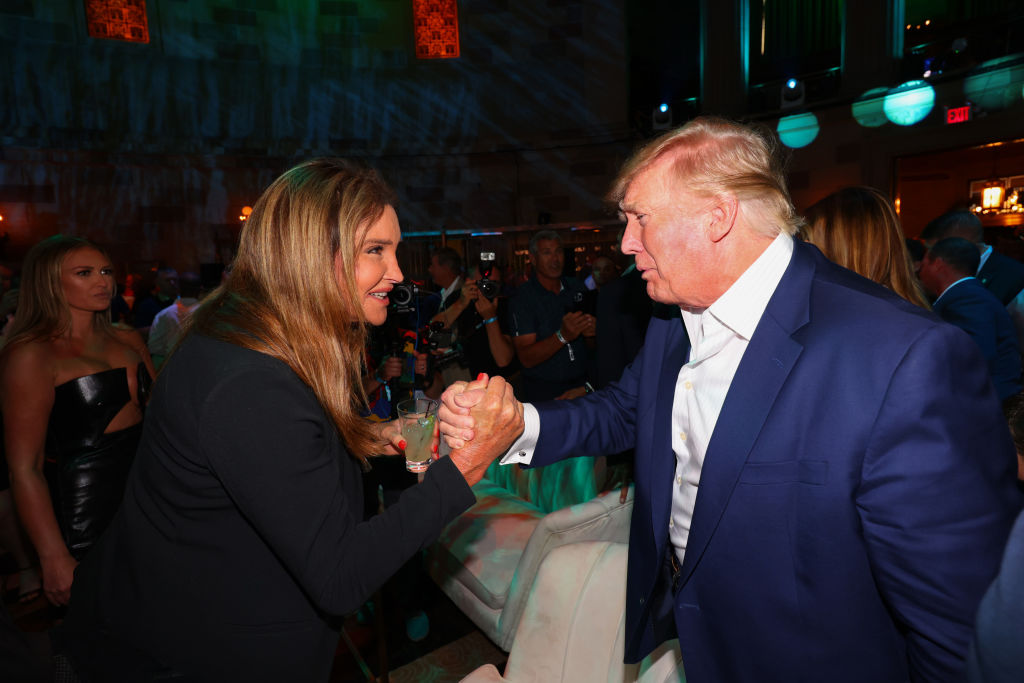
Caitlyn Jenner’s passport issue has sparked a major political debate after the Olympic gold medalist and longtime Donald Trump supporter said her renewed passport was returned with a male gender marker. Jenner, who came out as transgender in 2015 and says she had already updated her legal documents, revealed that the change has made international travel difficult and raised safety concerns at airports and checkpoints. Her experience has now become a high-profile example of how Trump’s federal gender policy is affecting transgender Americans.
Caitlyn Jenner Says Her Passport Was Returned With Male Marker
Caitlyn Jenner said the problem began when she renewed her U.S. passport and received it back with an “M” marker for male. According to Jenner, this happened even though she had previously updated her identifying documents after publicly coming out as transgender in 2015.
The issue became public during her appearance on the Tomi Lahren Is Fearless podcast, where she explained that the passport change has created practical problems for international travel. Jenner said the mismatch between how she presents and what her passport now shows could cause confusion, delays, and possible safety risks when she goes through official checkpoints.
Jenner also said she initially believed the passport marker may have been a simple administrative mistake. She reportedly sent documentation, including her birth certificate, hoping the issue would be corrected, but the passport was still returned with the male marker.
The situation is especially notable because Jenner has remained one of the most visible transgender conservatives in the United States. Her continued support for Trump has made the story more controversial, with critics pointing out that the policy now affecting her was created under the administration she still publicly supports.
What Is Trump’s Passport Gender Policy?
Trump’s passport gender policy requires federal identification documents to reflect a person’s sex as defined by the administration’s executive order, rather than their gender identity. The order, signed on January 20, 2025, directed federal agencies to recognize only male and female categories based on biological sex.
The policy changed how federal documents such as passports are handled. Under previous rules, transgender and nonbinary Americans had more flexibility to update gender markers on passports. Under the new approach, new applications and renewals must align with the government’s definition of sex.
That shift has created problems for transgender people whose legal documents, appearance, and lived identity may not match the marker printed on a renewed passport. Jenner’s case drew attention because she is famous, but advocacy groups have warned that many ordinary Americans could face similar problems without the same public platform.
The policy has also faced legal challenges. A federal lawsuit challenged changes to passport rules, and courts have debated whether the government can restrict gender marker changes in this way while broader litigation continues.
Why Does Caitlyn Jenner Say the Passport Is a Safety Issue?
Caitlyn Jenner described the passport issue as a safety concern because mismatched identification can create problems during travel. If an official sees a traveler who appears female but the passport lists male, that person may face extra questioning, delays, embarrassment, or possible discrimination.
For transgender travelers, documents that do not match their identity can increase stress in airports, hotels, border crossings, and security environments. Jenner said the issue means she can no longer travel internationally in the same way she once could.
Her concern is not only about convenience. Travel documents are meant to confirm identity quickly and clearly. When the document creates confusion instead, the traveler may be pulled aside or forced to explain deeply personal information in public or high-pressure settings.
Jenner’s comments also highlighted a broader concern among transgender Americans. Many people rely on passports not only for travel but also as a primary form of identification. A forced marker change can affect more than one trip; it can affect daily life, privacy, and personal security.
Jenner Says She Asked Trump for Help
Jenner said she tried to reach Trump directly about the issue. According to her account, she wrote him a letter explaining how the policy affected her and asked for help, but she had not received a response at the time of the interview.
She also said she did not believe the policy had been fully thought through. Even while criticizing the passport result, Jenner made clear that she still supports Trump, which made the story even more widely discussed online.
Public Reaction to Jenner’s Trump Appeal
The public reaction to Jenner’s passport issue has been sharply divided. Some people expressed sympathy and said the case shows why gender marker restrictions can cause real harm. Others criticized Jenner for continuing to support Trump despite policies that directly affect transgender Americans.
On The View, Ana Navarro strongly criticized Jenner’s appeal to Trump, arguing that Jenner was now experiencing the consequences of policies she had politically supported. The reaction reflected a wider frustration among critics who believe Jenner’s support for Trump has conflicted with the interests of many transgender people.
The controversy also spread across social media, where users debated whether Jenner deserved sympathy, criticism, or both. Some focused on the personal safety issue, while others focused on the political contradiction.
The story is powerful because it involves identity, celebrity, law, and political loyalty all at once. Jenner is not just a public figure affected by a policy. She is also a supporter of the president responsible for the executive order behind that policy.
That tension is why the story has gained so much attention. It raises a bigger question about what happens when political decisions become personal for the people who supported them.
How the Policy Affects Transgender Americans Beyond Jenner
The passport policy affects more than Caitlyn Jenner because many transgender and nonbinary Americans rely on accurate documents for safety and mobility. When identification does not match a person’s identity or appearance, it can create problems during travel, employment checks, housing applications, and other official situations.
Advocates have argued that incorrect gender markers can expose transgender people to harassment or discrimination. Even small mismatches on official documents can become serious when someone is dealing with police, border officers, airport security, or government agencies.
The policy also affects people who already updated their documents under previous rules but now face changes when renewing. That means some people may carry correct documents for years, only to have them changed when they apply for a new passport.
Jenner’s case may be unusual because of her fame, but the underlying problem is not unique. Many people affected by the rule may not have access to media attention, legal support, or direct political contacts.
That is why her story has become part of a much larger conversation. It is not only about one celebrity’s travel issue; it is about how federal policy can reshape the daily lives of thousands of people.
Why This Story Matters Politically
This story matters politically because it shows the real-world impact of federal identity rules. Policies that may sound abstract in political speeches can create direct consequences for people trying to travel, work, or move through public life safely.
Jenner’s situation is also politically significant because she has repeatedly supported Trump. Her criticism of this specific policy, while still defending the president overall, has made the case a symbol of political contradiction.
Supporters of the policy argue that federal documents should reflect biological sex as defined by the government. Critics argue that the rule ignores the lived reality of transgender people and creates unnecessary risks for travel and identification.
The debate is likely to continue as legal challenges move through the courts and more affected people come forward. Jenner’s high profile has brought renewed attention to the issue, but the final impact will depend on policy enforcement, court rulings, and public pressure.
For now, Caitlyn Jenner’s passport issue has become more than a celebrity headline. It has become a national example of how government rules on gender identity can affect personal safety, political loyalty, and basic freedom of movement.
Key Takeaways
- Caitlyn Jenner says her renewed passport was returned with a male gender marker.
- Jenner said the passport issue has affected her ability to travel internationally and created safety concerns.
- The change is linked to Trump’s federal policy requiring documents to reflect sex as defined by the administration.
- Jenner said she wrote to Trump asking for help but had not received a response at the time of her interview.
- The case has sparked debate because Jenner remains a Trump supporter despite criticizing the impact of the policy.
Caitlyn Jenner’s passport controversy shows how political decisions can become deeply personal when identity, travel, and government documents collide.