
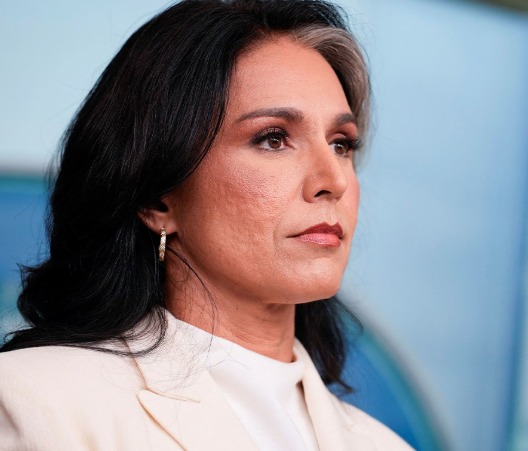
Tulsi Gabbard has announced she is stepping down as Director of National Intelligence in President Donald Trump’s administration, marking another major leadership change inside the White House.
Gabbard said her resignation will officially take effect on June 30, 2026. According to her resignation letter, the main reason behind the decision is her husband Abraham Williams’ recent diagnosis with a rare form of bone cancer.
Gabbard Says Family Comes First
In her resignation letter, Gabbard explained that she wants to step away from public service to support her husband during his medical treatment and recovery.
She wrote that the coming months will require her full attention and said she could not continue handling the demands of one of the country’s most sensitive national security positions while also supporting her family through the health crisis.
President Donald Trump publicly praised Gabbard after the announcement and thanked her for her service in the administration. He also expressed support for her family during the difficult situation.
A Controversial and Unusual Political Journey
Tulsi Gabbard has remained one of the most closely watched and controversial political figures in recent American politics.
Originally elected as a Democrat from Hawaii, she later became an independent voice on foreign policy before eventually aligning more closely with Republicans and joining Trump’s administration.
Her appointment as Director of National Intelligence drew strong reactions because she had limited intelligence-community experience before taking the role. Critics also frequently pointed to her past comments on Russia, Syria, and US foreign policy.
Supporters, however, praised her anti-war stance and willingness to challenge traditional foreign policy positions in Washington.
Reports Suggest Internal White House Friction
While Gabbard publicly cited family reasons for resigning, several reports suggested tensions had also been building behind the scenes inside the administration.
Some reports claimed White House officials had become frustrated with parts of her leadership style, messaging, and handling of intelligence-related controversies.
CNN and other outlets reported that rumors about her possible departure had circulated internally for weeks before the official announcement.
However, no official statement from the White House indicated she was forced out.
Aaron Lukas Named Acting Intelligence Chief
President Trump announced that Principal Deputy Director of National Intelligence Aaron Lukas will serve as acting intelligence chief after Gabbard’s departure becomes official.
The leadership transition comes during a period of significant global tensions involving conflicts in the Middle East, relations with China and Russia, and continuing cybersecurity concerns.
Why the Resignation Matters
The Director of National Intelligence oversees coordination among America’s intelligence agencies, making it one of the most powerful national security positions in the US government.
Gabbard’s resignation is important not only because of her high-profile political background, but also because it adds to broader instability and turnover within the Trump administration.
Her departure could also reshape internal power dynamics involving intelligence agencies, national security advisors, and foreign policy decision-making heading into the 2026 election season.
Key Takeaways
- Tulsi Gabbard announced her resignation as Director of National Intelligence.
- She said her husband’s rare bone cancer diagnosis was the primary reason for stepping down.
- The resignation becomes effective June 30, 2026.
- President Trump praised Gabbard and named Aaron Lukas as acting intelligence chief.
- Reports also suggested internal White House tensions during her tenure.
- Gabbard’s time in office was marked by controversy and strong political reactions.
The resignation closes another dramatic chapter in Tulsi Gabbard’s unusual political career, while raising fresh questions about the future direction of US intelligence leadership.