
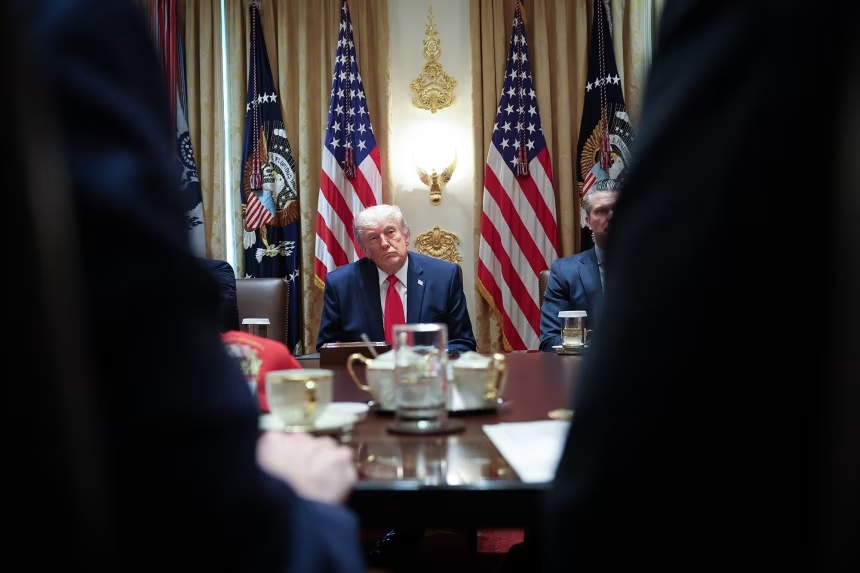
President Donald Trump is preparing a new executive order aimed at reshaping the United States’ approach to artificial intelligence, according to officials familiar with the administration’s plans. The proposed action reflects growing concerns about global competition in AI development and the role government policy should play in guiding the rapidly evolving technology.
The move comes as AI continues transforming industries, influencing national secur!ty discussions, and becoming a major focus of economic competition between leading global powers.
Why Is the Trump Administration Focusing on AI?
Artificial intelligence has emerged as one of the most important technologies of the modern era.
Governments around the world are investing heavily in AI research, infrastructure, and workforce development. Policymakers increasingly view AI as a critical factor in economic growth, technological leadership, and national secur!ty.
Administration officials argue that maintaining American leadership in AI is essential for long-term competitiveness. Supporters of the executive order say the United States must accelerate innovation while ensuring that regulations do not unnecessarily slow development.
The proposal reflects broader efforts to strengthen the country’s position in an increasingly competitive global technology landscape.
What Could the Executive Order Include?
While details continue to emerge, the executive order is expected to focus on expanding AI development, increasing federal support for innovation, and encouraging broader adoption of AI technologies across government and industry.
Officials have reportedly discussed measures involving workforce training, research investment, infrastructure development, and the removal of regulatory barriers that some believe could limit innovation.
The administration is also expected to emphasize maintaining US leadership in advanced technologies while encouraging private-sector participation in AI growth.
A Different Approach to AI Governance
The proposal appears to signal a shift toward prioritizing innovation and competitiveness.
Supporters argue that rapid technological advancement requires flexible policies that allow researchers and companies to develop new systems without excessive restrictions. They believe the United States must remain competitive as other nations accelerate their own AI initiatives.
Critics, however, warn that innovation must be balanced with safeguards addressing privacy, misinformation, bias, and public safety concerns.
How Important Is AI to the US Economy?
AI is increasingly becoming a major driver of economic activity.
Businesses across healthcare, finance, manufacturing, education, transportation, and technology are integrating AI tools into daily operations. Analysts believe the technology has the potential to boost productivity, create new industries, and transform existing business models.
Investment in AI-related companies has surged in recent years as organizations seek competitive advantages through automation and data-driven decision-making.
Many economists view AI as a transformative technology comparable to the internet, electricity, or personal computing in terms of its long-term economic impact.
What Are the Main Concerns Surrounding AI Growth?
Despite widespread optimism, AI development continues to raise important questions.
Researchers, policymakers, and industry leaders have debated issues involving privacy, employment, intellectual property, misinformation, and accountability. Some experts worry that rapid deployment of powerful AI systems could outpace the development of appropriate safeguards.
Others argue that excessive regulation could hinder innovation and weaken the country’s competitive position relative to international rivals.
Balancing Innovation and Oversight
One of the central challenges facing policymakers is finding the right balance.
Supporters of stronger oversight believe guardrails are necessary to reduce potential risks and build public trust. Advocates of lighter regulation argue that innovation thrives when developers have greater freedom to experiment and create.
The executive order is expected to contribute to this ongoing debate rather than settle it entirely.
How Could This Affect Businesses and Workers?
If implemented, the executive order could influence how companies invest in AI technologies and how workers prepare for a changing economy.
Businesses may benefit from expanded research initiatives, training programs, and government support aimed at accelerating adoption. Workers could see increased opportunities in fields related to software development, engineering, data science, and advanced technology management.
At the same time, organizations will continue facing questions about workforce adaptation and how AI may reshape certain job functions.
Many experts believe future success will depend on helping workers develop skills that complement rather than compete with AI systems.
Why This Executive Order Matters
The proposed action reflects the growing importance of artificial intelligence as both an economic and strategic priority.
As governments worldwide compete for leadership in emerging technologies, policy decisions made today could influence innovation, investment, and competitiveness for decades.
Whether the executive order ultimately accelerates AI development, reshapes regulation, or influences future legislation, it highlights the increasingly central role AI plays in discussions about America’s economic future.
Key Takeaways
- The Trump administration is preparing an executive order focused on artificial intelligence policy.
- The proposal is expected to emphasize innovation, competitiveness, and AI development.
- Officials view AI as a critical technology for economic growth and national secur!ty.
- Supporters favor policies that accelerate innovation, while critics seek stronger safeguards.
- The executive order could influence future discussions about AI regulation, workforce development, and technological leadership.
As artificial intelligence continues advancing at a rapid pace, the policies adopted today may determine which nations lead the next generation of technological innovation.