
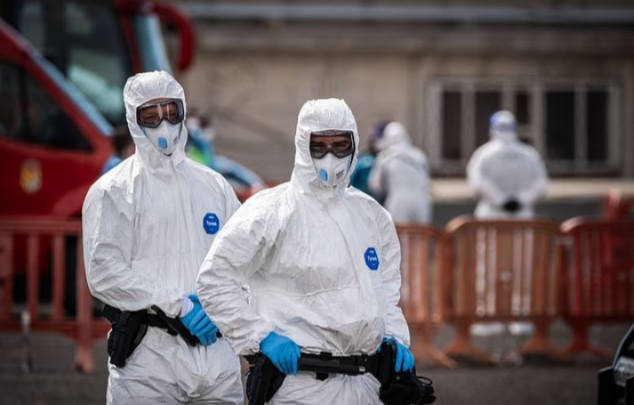
The evacuation of passengers from the hantavirus-hit MV Hondius sparked protests in Tenerife after locals raised concerns about safety protocols before the ship’s arrival. The expedition cruise vessel, linked to multiple confirmed and suspected Andes hantavirus cases, became the center of an international health operation after passengers had to be assessed, evacuated, and flown home under strict medical controls. Officials stressed that the wider public risk remained low, but fears among some residents grew because of memories of past outbreak emergencies.
MV Hondius Arrives Near Tenerife for Evacuation
The MV Hondius arrived at Granadilla port in Tenerife after sailing from Cape Verde, where a safe evacuation could not be completed. Spanish authorities then organized a complex operation to remove passengers and crew while avoiding contact with the island’s general population.
The operation involved Spanish health officials, police, Guardia Civil teams, port authorities, international governments, and the World Health Organization. More than 300 Guardia Civil members helped coordinate the controlled disembarkation and transfer process.
Passengers were required to wear protective equipment during the evacuation and were moved through carefully managed routes before being sent to their home countries on repatriation flights.
The goal was to get everyone off the ship safely while protecting local residents and transport workers.
Why Locals Protested the Ship’s Arrival
Some Tenerife residents and port workers protested because they feared the arrival of a virus-hit cruise ship could create unnecessary risk for the island. Protesters demanded clear safety measures before the vessel was allowed to dock.
According to ITV, some residents gathered outside the Canary Islands Parliament and called for strict protocols, including tugboats, protective equipment, and clear handling plans under the slogan “Respect Tenerife. Safety Protocols.”
The concern was not only about hantavirus itself. It was also about trust, communication, and memories of the COVID era, when island communities and travel hubs faced major disruption.
Some locals questioned why Tenerife had to host the evacuation and worried that officials were not being transparent enough.
Spanish national authorities later took control of the operation and presented it as a humanitarian and public-health response.
What Is Hantavirus?
Hantaviruses are a group of viruses usually carried by rodents. People are most often exposed when they breathe in particles from infected rodent urine, droppings, or saliva.
The strain linked to this outbreak is Andes virus, which is unusual because it can sometimes spread between people through close and prolonged contact.
That does not mean it spreads easily like common respiratory viruses. Health officials have repeatedly said the risk to the wider public remains low when proper precautions are followed.
The main concern is close exposure to infected people, careful monitoring of passengers, and quick treatment if symptoms appear.
How Serious Was the Outbreak?
The outbreak has been treated seriously because several passengers became severely unwell. Recent reporting said there were six confirmed cases, additional suspected cases, and three fatalities linked to the MV Hondius outbreak.
The Guardian reported that British passengers repatriated from the ship were taken to isolation facilities in the UK, where they will be monitored for symptoms.
The Financial Times reported that two evacuated passengers from the U.S. and France tested positive after leaving the vessel, with international health authorities continuing to track possible exposures.
These developments explain why officials used strict controls, even while saying the risk to the general public was low.
Passengers Sent Home Under Strict Protocols
After the ship reached Tenerife, passengers were evacuated and repatriated to several countries. Flights were arranged for groups returning to places including the UK, Australia, the Netherlands, and other destinations.
The UK repatriated 20 British passengers, along with a German national living in the UK and a Japanese passenger, to Manchester before transferring them to Arrowe Park Hospital in Wirral for isolation and assessment.
Those passengers reportedly tested negative before departure but still entered monitoring because symptoms can take time to appear.
UK officials said passengers would undergo daily check-ins and self-isolate for 45 days, with hospital transfer plans ready if symptoms developed.
Why the Operation Was So Complicated
The evacuation was complicated because the ship carried passengers from multiple countries, and some people had already left earlier stops before the outbreak was fully understood.
Authorities had to coordinate medical checks, protective equipment, small-boat transfers, airport transport, repatriation flights, isolation plans, and international contact tracing.
Weather was also a concern before the operation. Earlier reporting warned that rough conditions could delay the evacuation and make small-boat transfers harder.
By the time the evacuation went ahead, calm weather helped Spanish officials carry out the plan successfully.
The operation was described as unprecedented because of the mix of a rare virus, cruise passengers, international travel, local protest, and strict health controls.
Why Officials Say Public Panic Is Not Needed
Officials have stressed that hantavirus is not spreading like COVID. Andes virus can rarely spread between people, but usually only after close and prolonged contact with someone who is unwell.
That means ordinary residents in Tenerife were not considered at major risk if passengers were handled under proper medical controls.
The World Health Organization and national health teams supported the operation, and Spanish authorities said the evacuation followed international law and humanitarian principles.
The public-health message is clear: the situation was serious for those onboard and their close contacts, but it was not treated as a broad community outbreak.
Key Takeaways
- The MV Hondius evacuation in Tenerife followed a hantavirus outbreak linked to confirmed and suspected Andes virus cases.
- Some Tenerife locals and port workers protested, demanding strict safety protocols before the ship arrived.
- Spanish authorities carried out a controlled evacuation using police, Guardia Civil, medical teams, and repatriation flights.
- Passengers were sent to their home countries under isolation and monitoring rules.
- Health officials say the wider public risk remains low because Andes virus usually requires close and prolonged contact to spread.
- The operation became a major international health response, but officials stressed it was not a COVID-style threat.
The MV Hondius evacuation shows how quickly a rare outbreak can become an international operation when cruise travel, local fears, and public-health protocols collide.