
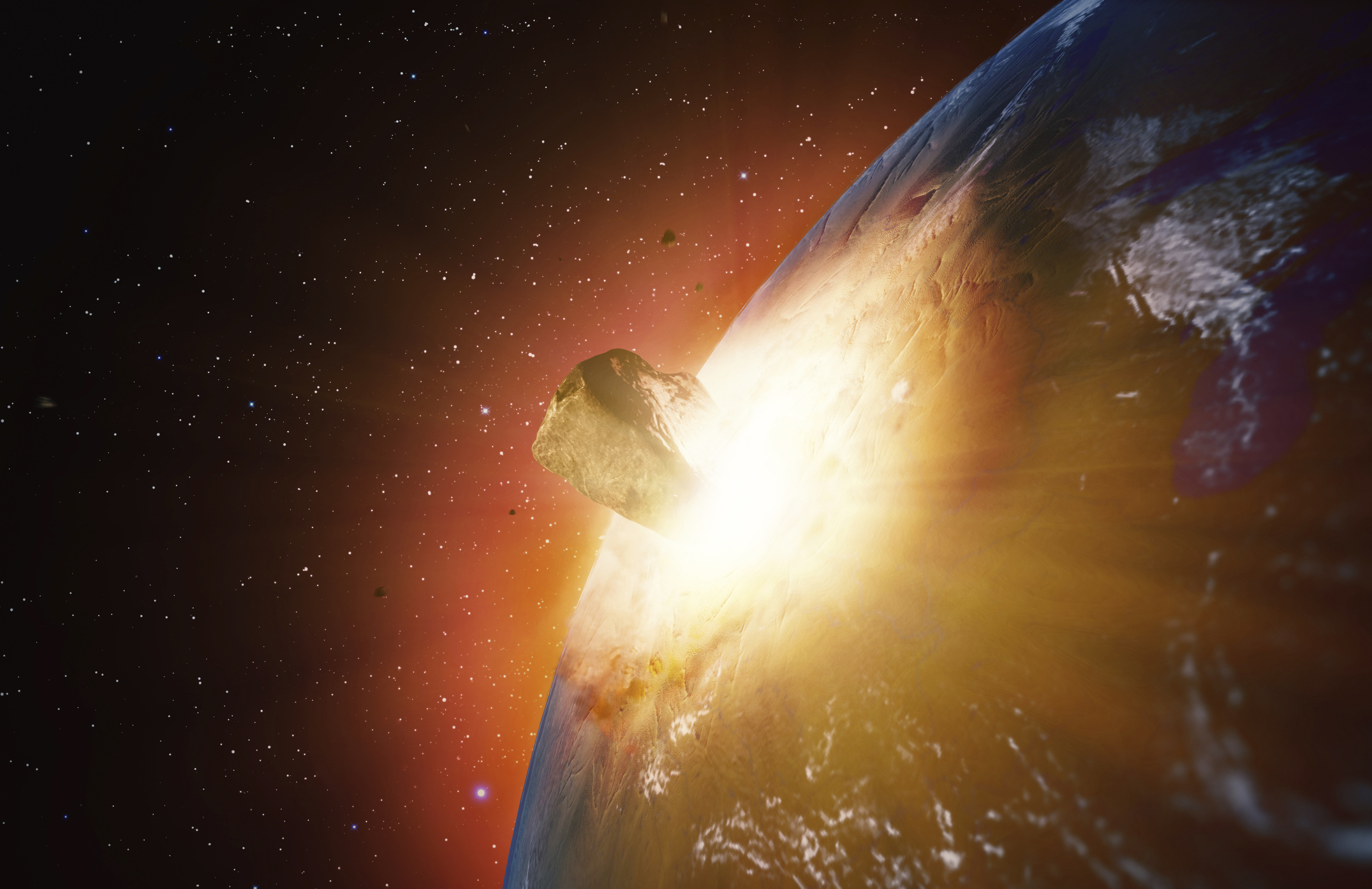
NASA supercomputer predictions about Earth’s future have sparked fresh attention after scientists modeled when life as we know it may no longer survive on our planet. The research does not suggest the world is ending soon, and it is not a warning about an immediate disaster. Instead, the study looks far into the future, showing how the Sun’s gradual changes could eventually strip Earth’s atmosphere of the oxygen needed by humans, animals, and most complex life.
NASA-Linked Research Points to Earth’s Oxygen Deadline
The prediction is based on scientific modeling of Earth’s long-term atmosphere, not a sudden doomsday forecast. Researchers used a combined climate and biogeochemistry model to study how oxygen levels may change as the Sun becomes brighter over geological time.
The study was led by Kazumi Ozaki of Toho University and Christopher Reinhard of Georgia Institute of Technology. Their work, published in Nature Geoscience, estimated that Earth’s oxygen-rich atmosphere may last for about 1.08 billion more years, with an uncertainty of around 0.14 billion years.
That number may sound frightening, but it is extremely far away on any human timescale. One billion years is longer than the entire history of human civilization many millions of times over.
The key point is that Earth’s breathable atmosphere is not permanent. The oxygen-rich environment humans depend on is part of a temporary phase in the planet’s history.
Scientists say the future loss of oxygen is linked to increasing solar energy. As the Sun ages, it gradually becomes brighter, changing Earth’s climate and disrupting the systems that currently help maintain oxygen in the atmosphere.
What Did the Supercomputer Actually Predict?
The supercomputer modeling predicted that Earth’s oxygen levels will eventually drop sharply, making the planet unlivable for oxygen-breathing complex organisms. This does not mean Earth itself will disappear, but it does mean the planet could become hostile to life forms like humans and animals.
The researchers found that oxygen could fall to levels similar to those seen on ancient Earth before the atmosphere became rich in oxygen. That future atmosphere would be very different from the one humans breathe today.
The model suggests this deoxygenation may happen before Earth reaches a full moist greenhouse state, which is a stage where surface water loss becomes extreme. In simple terms, oxygen loss may become a major problem before the planet fully dries out.
Some viral reports have described the prediction as an “exact date” for the end of life on Earth. That wording is misleading. The study gives a scientific estimate based on simulations, not a calendar appointment for the planet’s final day.
Still, the result is important because it gives scientists a better picture of Earth’s long-term habitability. It shows that even a stable, life-supporting planet has limits when its host star changes over time.
Why Would Earth Lose Oxygen in the Future?
Earth would lose oxygen because the Sun’s increasing brightness will gradually alter the planet’s carbon cycle, climate, and biological productivity. These systems are deeply connected, and small long-term changes can eventually reshape the entire atmosphere.
Today, oxygen is largely maintained by photosynthesis. Plants, algae, and certain microbes produce oxygen while using carbon dioxide and sunlight.
In the distant future, rising solar energy is expected to reduce carbon dioxide levels through long-term geological processes. As carbon dioxide becomes too low, photosynthetic organisms may struggle to survive and produce enough oxygen.
Once oxygen production weakens, the atmosphere can shift rapidly toward an oxygen-poor state. The study suggests this transition could happen much faster than the slow buildup of oxygen that occurred earlier in Earth’s history.
That change would make life extremely difficult for oxygen-breathing creatures. Humans, mammals, birds, reptiles, and many other animals would not be able to survive in such an atmosphere.
Some simple microbial life might remain for a time, but Earth would no longer look like the green, oxygen-rich planet we know today.
Is This Prediction a Warning for People Today?
This prediction is not a warning that people alive today need to fear an oxygen collapse. The estimated timeline is around one billion years in the future, so it is not connected to current climate change, pollution, or modern environmental issues.
However, the study still matters because it helps scientists understand how planets remain habitable over time. Earth is often treated as the perfect example of a living planet, but this research shows that even Earth’s life-friendly conditions have an expiration window.
The prediction also reminds people that planetary habitability depends on many connected systems. A planet needs the right distance from its star, a stable climate, an atmosphere, geological cycling, water, and biological activity.
When one major part changes, the whole system can shift. In Earth’s case, the Sun’s slow brightening will eventually push the planet beyond the conditions needed for complex life.
The study is also useful for scientists searching for life beyond our solar system. If oxygen-rich atmospheres do not last forever, then alien worlds may be habitable even when they do not show strong oxygen signatures.
That makes the research bigger than Earth alone. It changes how scientists think about finding life on distant planets.
Why the “World Will End” Headlines Can Be Misleading
The “world will end” headlines can be misleading because the study is not predicting Earth’s destruction in the dramatic way many people imagine. Earth will still exist long after oxygen levels fall, but it may no longer support complex life as we know it.
There is also a difference between the end of human habitability and the physical end of the planet. Humans would likely face major survival challenges long before Earth is completely lifeless.
Some reports claim a specific year, such as 1,000,002,021, but that should be treated as a simplified viral framing rather than a precise scientific countdown. The actual research gives an estimated timescale, not an exact final date.
Science models work by testing possible future conditions using known physics, chemistry, and biology. They can identify likely trends, but they do not provide perfect certainty over a billion-year timeline.
That is why the best interpretation is careful and balanced. The research is serious, but it should not be turned into panic.
It tells us that Earth’s oxygen-rich era will not last forever, but it also tells us that the change is unimaginably far away from the present.
What This Means for the Search for Alien Life
This research matters for alien life because oxygen is one of the main signs scientists look for when studying potentially habitable planets. Earth’s atmosphere is rich in oxygen because life transformed it over billions of years.
If oxygen is temporary, then a planet could host life before or after its oxygen-rich phase. That means scientists may need to search for other biosignatures, not only oxygen.
The study specifically highlights the importance of finding ways to detect life on worlds with low-oxygen or oxygen-free atmospheres. This could include looking for methane, organic haze, or other chemical clues linked to biological activity.
That idea is important because telescopes may only capture a snapshot of a planet’s history. If researchers look only for oxygen, they might miss planets where life exists but has not created an oxygen-rich atmosphere.
Earth itself spent much of its history without the oxygen levels humans breathe today. The oxygen-rich atmosphere is not the full story of life on our planet.
By studying Earth’s distant future, scientists can better understand what to look for across the universe.
Key Takeaways
- NASA-linked modeling suggests Earth’s oxygen-rich atmosphere may last for about 1.08 billion more years.
- The prediction is based on climate and biogeochemical simulations, not an immediate doomsday warning.
- As the Sun becomes brighter, Earth’s carbon cycle and photosynthesis may weaken, leading to a sharp oxygen decline.
- The future atmosphere could become similar to ancient low-oxygen Earth, making survival impossible for humans and most animals.
- The study also helps scientists understand how to search for life on distant planets with different atmospheric conditions.
Earth’s distant future may sound unsettling, but the real lesson is scientific: even a living planet has a timeline, and understanding that timeline helps us better understand life across the universe.