
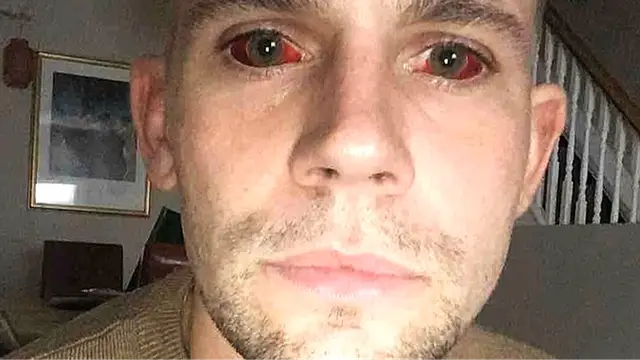
A cocaine binge warning from a British man has gone viral after he revealed how a days-long episode left him temporarily without vision, with severely bloodshot eyes, and close to losing his life. Dave Mullen, who says he has now been sober for 15 months, is sharing his experience to show how quickly casual partying can spiral into addiction and life-threatening consequences.
Dave Mullen’s Cocaine Binge Warning After Temporary Blindness
Dave Mullen’s story is a stark reminder that substance misuse can turn dangerous much faster than many people expect. According to his account, he first tried cocaine on his 17th birthday after being offered it in a pub, a decision he now deeply regrets.
What began as occasional use during nights out, soccer away days, and holidays with friends later became a serious addiction. By the time he was 19, Mullen said he realized the habit had grown beyond casual use and was beginning to affect his mental health and the people around him.
At his worst, he described drinking heavily and spending large amounts of money on cocaine during long binges. One episode in August 2021 reportedly led to drug-induced psychosis, a coma, temporary blindness, and a frightening change in the appearance of his eyes.
The images from that period showed his eyes looking intensely red, something he said lasted for weeks. Mullen said his vision disappeared completely during the episode, and his eyes remained bloodshot for around two months afterward.
What Happened During the Five-Day Cocaine Binge?
During the binge, Mullen said he lost touch with reality and ended up in a medical crisis. He described the incident as the result of a four- or five-day episode that triggered drug-induced psychosis and left him unable to see.
Drug-induced psychosis can involve confusion, paranoia, hallucinations, extreme distress, and behavior that may put the person or others at risk. Stimulants such as cocaine are known to be linked with serious physical and mental health complications, including addiction and overdose.
Mullen’s case became even more alarming because the visible effects continued after the immediate crisis. He said that six weeks later, his eyes were still heavily bloodshot, and the appearance remained for about two months.
One moment he recalled from returning to work showed just how disturbing the change looked to others. While working at a retirement home, he said one man reacted fearfully and chased him with a Bible, believing he looked like “the devil.”
That incident became one of the wake-up calls in his journey, but it did not immediately end the cycle. Mullen said he later returned to old habits, and the struggle continued for several more years.
How Cocaine and Alcohol Can Increase the Danger
Cocaine and alcohol are often used together in social settings, but that combination can raise the risk of serious harm. Mullen himself said the two went “hand-in-hand” during his addiction, with drinking often connected to his cocaine use.
Health authorities warn that cocaine can cause severe medical problems, including cocaine use disorder and overdose. The National Institute on Drug Abuse also notes that cocaine can be mixed or contaminated with highly potent substances, increasing the risk for people who may not know exactly what they are taking.
Alcohol can also lower inhibitions and make risky decisions more likely. In Mullen’s case, he said the pattern began when he was young and “naive,” then gradually became more destructive as the years passed.
The danger is not limited to one dramatic incident. Repeated stimulant use can affect the body and mind over time, while binge patterns may lead to exhaustion, dehydration, panic, paranoia, and emergency medical situations.
Mullen’s story shows why addiction is rarely just about one substance or one night out. It often becomes a wider pattern involving social pressure, mental health struggles, alcohol, denial, and repeated attempts to stop.
The Hospital Warning That Changed His Life
The turning point came in March 2024, when Mullen said a hospital visit forced him to face the seriousness of his condition. Doctors reportedly warned him that he could die if he continued, and that moment pushed him to quit.
Since then, he says he has stayed sober for 15 months. His decision to speak publicly is not about shock value alone; he says he wants others to understand the reality behind what some people dismiss as normal party culture.
Mullen said he does not believe people are educated enough about the dangers of drugs or alcohol. He also expressed concern that cocaine has become too normalized and socially accepted in some circles.
His message is especially focused on people who may still see occasional use as harmless. His own experience began with a single line at 17 and later developed into an addiction that damaged his health, relationships, work life, and mental stability.
Why Personal Recovery Stories Matter
Personal stories can reach people in a way statistics often cannot. Mullen’s photos and account provide a visible example of how substance misuse can affect the body, not just privately but in a way that changes how a person functions in everyday life.
His recovery also highlights an important point: addiction can be treated, and people can rebuild their lives with the right support. The National Institute on Drug Abuse describes addiction as a treatable condition, even though it can be long-lasting and dangerous if ignored.
Why This Cocaine Binge Warning Is Gaining Attention
This cocaine binge warning is gaining attention because it challenges the idea that recreational drug use is always controlled or harmless. Mullen’s experience shows how quickly repeated use, alcohol, and social habits can turn into a medical emergency.
The story also stands out because of the visible physical effects. His bloodshot eyes became a powerful image of the damage he says was happening inside his body and mind. For many readers, that image may make the risks feel more real than a general warning ever could.
At the same time, the story should be understood carefully. It is one man’s reported experience, not a medical diagnosis for everyone who has used cocaine. Still, it aligns with broader health warnings that stimulant use can carry serious risks, including mental health episodes, overdose, and long-term harm.
The main lesson is not just that one binge can be dangerous. It is that repeated patterns can build quietly over years, especially when drug use is tied to drinking, social events, and emotional struggles.
Mullen’s recovery gives the story a hopeful side. After years of addiction, frightening symptoms, and a hospital warning, he says he has remained sober and now wants his experience to stop someone else from reaching the same point.
Key Takeaways
- Dave Mullen says a four- or five-day cocaine binge led to temporary blindness, drug-induced psychosis, and severely bloodshot eyes.
- He first tried cocaine at 17 and says the habit had become an addiction by the time he was 19.
- Mullen said a March 2024 hospital warning pushed him to quit, and he has now been sober for 15 months.
- Health experts warn that cocaine use can lead to addiction, overdose, and serious mental and physical complications.
- His story is now being shared as a warning about the normalization of cocaine and alcohol-fueled party culture.
Mullen’s recovery story leaves one important question: how many people need to see the warning signs before a “casual” habit becomes a crisis?