
A black suitcase may look practical, professional, and easy to match with any travel style, but travel security experts are now warning passengers that it may also make luggage easier to lose, mix up, or steal. The reason is simple: black, navy, and gray bags are everywhere at airports. When dozens of similar suitcases appear on the same carousel, it becomes harder to spot your own bag quickly and easier for someone else to walk away with it unnoticed.
Why Black Suitcases Can Be Risky at Airports
Black suitcases can be risky because they blend into the crowd of luggage at busy airports. Most travelers choose dark-colored bags because they hide dirt, scratches, and scuff marks better than bright luggage.
That practical choice also creates a problem. When nearly everyone has a similar-looking bag, identifying the correct suitcase becomes more difficult.
Security expert Ed Dharmeratnam has warned that thieves prefer luggage that does not stand out. A black or navy suitcase can be taken from a carousel without attracting much attention because it looks like so many others.
If a traveler shouts that someone has taken their bag, describing it as “a black suitcase” may not help much. There could be dozens of black suitcases in the same area.
A bright or unusual suitcase is much easier to describe. If someone walks away with a neon green or patterned case, other people are more likely to notice.
That is why experts suggest choosing luggage that works against a thief’s advantage. The more ordinary the bag looks, the easier it may be for someone to disappear with it in a crowd.
Why Do So Many Travelers Choose Black Luggage?
Travelers choose black luggage because it feels safe, simple, and durable. Black bags look clean, formal, and suitable for business or leisure travel.
They also tend to hide damage better than lighter colors. A white, cream, or pastel suitcase may show marks quickly, while a black case can handle airport handling without looking messy after one trip.
Black luggage is also widely available. Many stores sell more dark-colored suitcases than bright ones because they appeal to the largest number of buyers.
For many people, the decision is not about security. It is about convenience. A black suitcase looks sensible and less flashy.
The problem is that this same popularity creates confusion. A suitcase color becomes less useful when almost everyone else has picked the same one.
At baggage claim, travelers often see people checking tags on identical-looking bags because they are not sure which one is theirs. That delay can create stress and increase the chance of a mistake.
A dark suitcase may be practical, but it does not give the owner much visual advantage in a crowded terminal.
How Black Bags Make Theft and Mix-Ups Easier
Black bags make theft and mix-ups easier because they are harder to identify quickly. In a busy airport, seconds matter when luggage is moving on a carousel and passengers are standing close together.
A thief does not want attention. A plain black suitcase gives them cover because it looks normal and does not draw the eye.
Accidental mix-ups are also common. A tired traveler may grab the wrong black suitcase, especially after a long flight, a stressful connection, or a late-night arrival.
Even honest mistakes can create major problems. If someone leaves with the wrong bag, both travelers may lose time reporting the issue, contacting the airline, and trying to recover their belongings.
Dark-colored bags are also harder to track visually if someone moves quickly through a crowd. A bright bag with a bold design is easier to follow from a distance.
This is why luggage visibility matters. A suitcase does not need to be expensive or flashy, but it should be recognizable.
The easier it is to identify your bag, the harder it is for someone else to take it unnoticed.
What Suitcase Colors Are Safer for Travel?
Brighter suitcase colors are safer from an identification point of view because they stand out in a crowd. Colors like red, yellow, orange, bright blue, purple, or green can make luggage easier to spot.
Patterned luggage can also help. Stripes, prints, unusual textures, or color-blocked designs make a suitcase more distinctive than a plain black case.
Experts often recommend choosing a color that works against a thief’s goal. If the bag is easy to describe, it becomes riskier for someone else to take it.
For example, shouting “that man with the bright green suitcase” is more useful than shouting “that man with the black suitcase.” The visual detail gives bystanders and airport staff something clear to notice.
However, travelers should also think practically. Very light colors may show dirt quickly, and extremely unusual luggage may not suit every traveler’s style.
A good balance is choosing a darker but distinctive color, such as deep red, teal, burgundy, or patterned navy. The goal is not to be flashy, but to be recognizable.
How to Make a Black Suitcase Safer
A black suitcase can be made safer by adding clear, unique identifiers. If you already own black luggage, you do not need to throw it away.
Start with a bright luggage tag that is easy to see from a distance. Choose a color that contrasts strongly with the suitcase, such as yellow, orange, pink, or neon green.
A colorful luggage strap can also help. Straps wrap around the bag and make it easier to identify on the carousel.
Stickers, patches, patterned handle wraps, and bold tape can make a plain bag look different from others. The key is to add something that cannot be easily confused with another traveler’s luggage.
Some travelers use ribbons, but ribbons can fall off or look similar to other people’s ribbons. If you use one, choose a unique color or pattern and combine it with another marker.
It is also smart to place your contact information inside the suitcase, not just outside. External tags can break or be removed, but an internal label can help airline staff identify the owner if the bag is lost.
Add a Tracker for Extra Peace of Mind
A luggage tracker can help travelers locate a missing bag faster. Small Bluetooth or GPS-style trackers can be placed inside luggage before a trip.
These devices do not prevent theft, but they may help you know whether your bag is still at the airport, on the plane, or somewhere unexpected.
Why Expensive Designer Bags Can Attract Attention
Expensive designer bags can attract attention because they may suggest valuable items are inside. Security experts warn that high-end luggage can act like a signal to thieves.
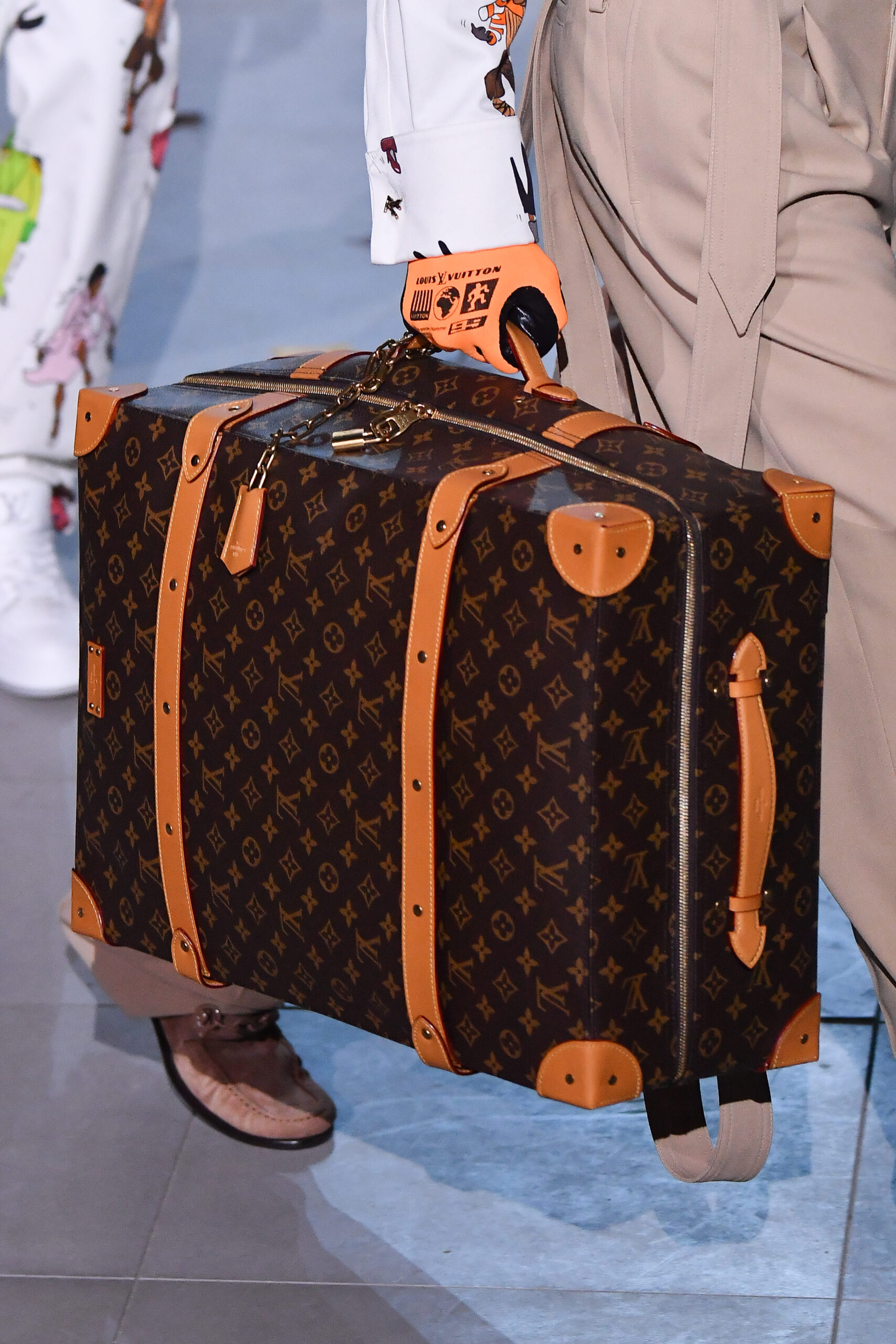
Brands such as Rimowa, Tumi, Louis Vuitton, and other luxury names are often easy to recognize. A thief may assume that a person carrying an expensive suitcase also has expensive clothing, electronics, jewelry, or other valuables inside.
That does not mean travelers should never use premium luggage. Quality suitcases can be durable, secure, and worth the investment for frequent flyers.
But visible luxury branding can increase attention. If safety and discretion are priorities, a less obvious suitcase may be a smarter choice.
Travelers should also avoid packing valuables in checked luggage whenever possible. Important documents, electronics, medication, jewelry, cash, and irreplaceable items should stay in carry-on bags.
The safest suitcase is not just about color. It is about making the bag identifiable without making it look like a target.
Airport Luggage Mistakes Travelers Should Avoid
One common mistake is leaving the baggage claim area without checking the luggage tag. Even if the suitcase looks right, the tag confirms whether it is truly yours.
Another mistake is using luggage that looks completely plain. A simple marker can save time and stress after landing.
Travelers should also avoid placing important valuables in outer pockets. These pockets can be opened more easily and may be checked quickly by someone looking for small items.
Do not rely only on airline tags. Printed baggage tags can be damaged, torn, or delayed during handling.
Taking a photo of your suitcase before checking it in can also help. If it goes missing, you can show airline staff exactly what it looks like.
Finally, stay close to the carousel and watch bags as they arrive. The faster you collect your luggage, the less time it sits unattended.
Key Takeaways
- Black, navy, and gray suitcases are harder to identify because so many travelers use them.
- Plain dark luggage may be easier for thieves to take without standing out.
- Bright, patterned, or uniquely marked bags are easier to spot at baggage claim.
- If you already use a black suitcase, add bright tags, straps, stickers, or handle wraps.
- Avoid packing valuables in checked luggage and consider using a tracker for extra peace of mind.
A black suitcase may be practical, but making your luggage more recognizable can save time, reduce stress, and make it harder for someone else to walk away with your bag unnoticed.